On 31 January 1943, in the ruins of Stalingrad, a tired, gray-faced Friedrich Paulus learned he had just been promoted to field marshal. It looked like an honor. It was not.
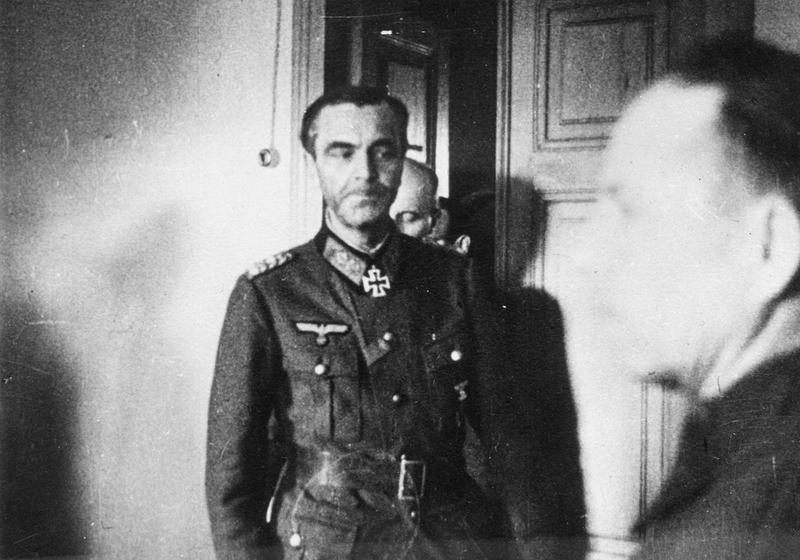
Hitler had never had a field marshal captured alive. The message was clear: a German field marshal dies rather than surrenders. The expectation was suicide. Paulus did not oblige. He surrendered to the Soviets instead, reportedly snapping that he had no intention of shooting himself for “this Bohemian corporal.”
They look similar because both men were German officers caught in the catastrophe of the Eastern Front, but Paulus and Hitler came from different worlds and made very different choices about war, loyalty and death. By the end of Stalingrad, one demanded suicide from others. The other refused to die for him.
This is a comparison of Hitler and Paulus along four lines: where they came from, how they operated, what happened to them, and what we remember about them. It explains why a general at the bloodiest battle in human history chose surrender over the death his leader wanted.
Origins: the Bohemian corporal vs the staff officer
Adolf Hitler was born in 1889 in Braunau am Inn, Austria-Hungary, and grew up in Linz and Vienna. He failed as an art student, bounced between cheap lodgings and shelters, and drifted into German nationalist politics. His military career in World War I was modest. He served as a dispatch runner in the Bavarian Army, was wounded, and reached the rank of Gefreiter, often translated as “corporal.” He never commanded large units. He never attended a staff college.
That “Bohemian corporal” insult that circulates online is rooted in how many professional officers saw Hitler. “Bohemian” pointed at his Austrian background and, to some, his shabby, outsider origins. “Corporal” pointed at his low rank and lack of formal military education. Whether Paulus used the exact phrase is debated, but the contempt it expresses is real. Many in the traditional officer corps viewed Hitler as an upstart with a messianic ego and a shallow grasp of operational art.
Friedrich Paulus could not have been more different. Born in 1890 in Breitenau in Hesse, he came from a lower-middle-class background but followed the classic route of the Prussian-German officer. He joined the army as a cadet before World War I, fought on the Western Front, and stayed in the tiny Reichswehr after 1918. He studied staff work, planning and logistics. By the 1930s he was a respected staff officer, not a charismatic rabble-rouser.
Hitler’s rise came through politics, propaganda and street violence. He used the failed Beer Hall Putsch in 1923, prison time, and the writing of Mein Kampf to build a personality cult. By 1933 he had maneuvered into the chancellorship and then dismantled the Weimar Republic. His authority was personal and ideological, not professional or institutional.
Paulus’s rise came through the professional military hierarchy. He served under General Heinz Guderian in the development of armored tactics, then became deputy chief of the General Staff. When Hitler launched Operation Barbarossa in June 1941, Paulus helped plan it. In early 1942 he was given command of the newly formed 6th Army, which would march toward the Volga and into history.
So what? The “Bohemian corporal” versus the staff officer divide mattered because it set up a clash between ideological leadership and professional military culture. At Stalingrad, that clash would determine whether a whole army lived or died.
Methods: ideology and will vs planning and obedience
Hitler’s method of war was rooted in ideology and willpower. He believed that resolve could overcome material limits, that retreat was weakness, and that political goals trumped operational sense. He interfered constantly with his generals, issued stand-fast orders, and treated withdrawal as betrayal.
By 1942, this style hardened. After early victories, Hitler grew convinced he understood war better than his officers. He dismissed or sidelined those who argued for flexibility. He ordered that no German soldier in the East should surrender. He expected officers to die rather than abandon positions. Suicide, for him, was an acceptable and even honorable way out if it preserved his myth of infallibility.
Paulus’s method was different. He was a planner, not a gambler. As commander of 6th Army, he was cautious and methodical. In the early stages of the Stalingrad campaign, he tried to follow orders while managing logistics and the reality of Soviet resistance. He was not a bold field commander like Erich von Manstein or Guderian. He was a staff man trying to execute a plan drawn up at higher levels.
When 6th Army reached Stalingrad in late summer 1942, Hitler’s orders were clear: take the city, both for its strategic position on the Volga and for its symbolic value as “Stalin’s city.” The fighting became a brutal urban slugfest. German and Soviet troops battled house to house. Casualties soared. Paulus repeatedly requested permission to adjust, withdraw or shorten his lines. Hitler refused.
In November 1942, the Soviets launched Operation Uranus, a massive encirclement. They smashed the weaker Romanian and Italian units on the flanks and closed a ring around 6th Army. Around 250,000 Axis troops were trapped in what became known as the Stalingrad pocket.
At that point, Paulus’s staff instincts told him the situation was untenable. He urged a breakout while fuel and supplies still existed. Hitler ordered him to hold fast. The Luftwaffe promised to resupply the pocket by air. It could not. The airlift delivered only a fraction of what was needed. Hunger, frostbite and disease spread.
Paulus obeyed. He did not order a breakout against Hitler’s instructions. He did not disobey the “no retreat” order. In this sense, he was a loyal executor of Hitler’s method, even as he privately doubted the wisdom of those orders.
So what? Hitler’s ideology of will and no surrender, combined with Paulus’s ingrained obedience, turned a dangerous encirclement into a catastrophe. Their methods locked 6th Army into a death trap instead of a fighting retreat.
Outcomes: suicide demanded vs surrender chosen
By January 1943, 6th Army was starving. Ammunition was low. The wounded lay in unheated cellars. Temperatures plunged well below freezing. Soviet artillery pounded the shrinking pocket. German radio traffic made the desperation clear.
Hitler’s response was not to allow surrender, but to raise the stakes. On 30 January 1943, the 10th anniversary of his coming to power, he promoted Paulus to Generalfeldmarschall. No German field marshal had ever been taken alive. The promotion was a signal: die in place. Hitler and his entourage expected Paulus to shoot himself rather than fall into Soviet hands.
Paulus did not. On 31 January, Soviet troops reached his headquarters in the basement of the Univermag department store in central Stalingrad. He surrendered. The southern pocket collapsed. The northern pocket held out a few more days, then also surrendered on 2 February 1943.
Some later accounts report Paulus saying he would not kill himself for “this Bohemian corporal.” Historians debate the exact wording and timing. What is clear is that Paulus rejected the demand for suicide. He told his captors he considered himself a prisoner of war. He refused to order his remaining troops to fight to the last man.
Hitler reacted with fury. He ranted that Paulus should have shot himself, that a field marshal had no right to surrender. In his mind, Paulus had failed not only militarily but morally. Hitler’s own end in April 1945 would follow the script he had in mind for others. Surrounded in Berlin, he chose suicide with Eva Braun in the bunker rather than capture.
So you have two outcomes shaped by the same ideology. Hitler demanded death before surrender and lived it out on himself. Paulus, who had obeyed almost every order up to that point, finally broke with that script when it required his own suicide.
So what? The contrast between Hitler’s suicide and Paulus’s surrender shows where personal survival, professional duty and ideological loyalty parted ways. Stalingrad became the place where at least one senior German commander refused to die for Hitler’s myth.
Aftermath: captivity, collaboration and shifting loyalties
What happened next is where many casual anecdotes stop and misconceptions start. Paulus did not walk free. He spent years in Soviet captivity. Conditions for German prisoners in the USSR were harsh. Many died of disease, exposure and malnutrition. Of the roughly 90,000 German soldiers who went into captivity at Stalingrad, only a small fraction ever returned to Germany.
Paulus, as a high-ranking prisoner, was treated differently. The Soviets saw propaganda value in him. At first he was reserved and depressed. He had been a loyal soldier of the Reich, and his family remained in Germany. But as the war turned against Hitler, Paulus’s attitude shifted.
In 1944, after the failed July 20 plot against Hitler, the Soviets brought Paulus to Moscow. He learned that some of his former colleagues, like Field Marshal Erwin von Witzleben, had been executed for their role in the conspiracy. That, and the scale of the disaster in the East, pushed him further away from the regime.
Paulus agreed to make anti-Hitler broadcasts and statements. He joined the National Committee for a Free Germany, a Soviet-backed group of German POWs and exiles calling on soldiers to turn against the Nazi leadership. He testified at the Nuremberg Trials in 1946, providing evidence about German planning for the invasion of the Soviet Union and the chain of command.
Hitler, of course, never saw any of this. He died in his bunker on 30 April 1945, his body burned in the garden of the Reich Chancellery. His method of exit fit the code he had tried to impose on Paulus at Stalingrad.
Paulus was released from Soviet captivity in 1953. He did not return to West Germany. He settled in Dresden in East Germany, under a communist regime aligned with the Soviets. He lived quietly, working as a civilian advisor on military history, and died there in 1957.
So what? Paulus’s postwar collaboration with Soviet-backed groups and testimony against Nazi leaders turned him from loyal executor to reluctant witness. His survival allowed a senior insider to help document how Hitler’s war had been planned and fought, something that would have been impossible if he had followed the suicide script.
Legacy: myth, blame and the meaning of Stalingrad
Hitler’s legacy is obvious and global: architect of the Holocaust, instigator of World War II in Europe, symbol of genocidal dictatorship. In military history, he is remembered as the political leader who increasingly overruled his generals, demanded impossible stands, and helped turn setbacks into disasters. Stalingrad is often cited as the turning point of the war in the East, and Hitler’s refusal to allow a breakout is central to that story.
Paulus’s legacy is more tangled. Among many Germans after the war, he was blamed for Stalingrad. Critics argued he was too obedient, too hesitant, that he should have disobeyed Hitler and broken out. Others pointed out that such a move might have failed anyway, given the strength of Soviet forces and the weakness of German logistics. The record is clear that he repeatedly asked for permission to withdraw and was refused.
His refusal to commit suicide has been interpreted in different ways. Some see it as a rare moment of moral courage, a rejection of Hitler’s death cult. Others see it as simple self-preservation that came too late to save his men. The quote about the “Bohemian corporal” captures a mood of contempt, but it does not erase the fact that Paulus had helped plan Barbarossa and commanded an army that took part in brutal occupation policies.
There is also a persistent misconception that all German officers shared Hitler’s “death before surrender” code. In reality, many surrendered when defeat was obvious, especially in 1945. What made Stalingrad stand out was the combination of Hitler’s explicit orders, the symbolic weight of the battle, and the scale of the encirclement.
Stalingrad itself has a clear definition in military history: it was a major battle on the Eastern Front from August 1942 to February 1943 in which the Soviet Red Army encircled and destroyed the German 6th Army. It marked the first large-scale, irreversible German defeat in the East and shifted the strategic initiative to the Soviets.
So what? The way we remember Hitler and Paulus at Stalingrad shapes how we think about responsibility and choice in authoritarian systems. Hitler’s demand for suicide and Paulus’s refusal to comply show that even inside a dictatorship, personal decisions at the edge of defeat can alter both individual fates and the historical record.
Why their different choices at Stalingrad still matter
They look similar because both Hitler and Paulus were German leaders tied to the disaster at Stalingrad, but their origins, methods, outcomes and legacies pull apart once you look closely. One was an ideologue who rose from failed artist to dictator and demanded death before surrender. The other was a career staff officer who obeyed too long, then finally refused to die for his leader.
Hitler’s path ended in self-inflicted death in a bunker, consistent with the code he tried to impose on his generals. Paulus’s path ran through surrender, captivity and later cooperation with the regime’s enemies. His survival helped document the inner workings of Hitler’s war and gave historians a key witness to the planning of the Eastern campaign.
So what? The contrast between Hitler’s suicide and Paulus’s surrender at Stalingrad is not just a dark anecdote. It is a window into how ideology, professional culture and personal fear collide when a war built on fanaticism starts to collapse.
Frequently Asked Questions
Did General Paulus really say he would not shoot himself for the “Bohemian corporal”?
The exact wording is uncertain and historians debate it, but several postwar accounts report Paulus using a phrase like “Bohemian corporal” to express contempt for Hitler. Whether or not he said those precise words at Stalingrad, the core fact is clear: Hitler expected him to commit suicide as a newly promoted field marshal, and Paulus refused, choosing surrender instead.
Why did Hitler expect Paulus to commit suicide at Stalingrad?
On 30 January 1943 Hitler promoted Paulus to field marshal, a rank no German officer had ever held in captivity. The promotion was widely understood as a signal that Paulus should die rather than surrender. Hitler believed that a field marshal had a duty to avoid capture, even by suicide, and he had already ordered that German troops in the East must not capitulate.
Could Paulus have disobeyed Hitler and broken out of Stalingrad?
Paulus and his staff did consider a breakout and urged permission to attempt one in November 1942, soon after the Soviet encirclement. Hitler refused and ordered 6th Army to hold its positions while the Luftwaffe supplied it by air, which proved impossible. Some historians argue a breakout might have saved part of the army, while others think Soviet strength and fuel shortages made success unlikely. What is clear is that Paulus chose to obey Hitler’s orders rather than attempt an unauthorized escape.
What happened to Paulus after he surrendered at Stalingrad?
Paulus spent years as a prisoner in the Soviet Union. Over time he distanced himself from the Nazi regime, joined the Soviet-backed National Committee for a Free Germany, and testified at the Nuremberg Trials about German war planning. He was released in 1953 and settled in East Germany, where he lived quietly until his death in 1957.