They look similar because from far away, they are. Two ancient civilizations, both rising out of desert, both hugging rivers, both inventing writing and kings and gods with animal heads. From a distance, Mesopotamia between the Tigris and Euphrates and Egypt along the Nile blur into one stock image of “the ancient world.”
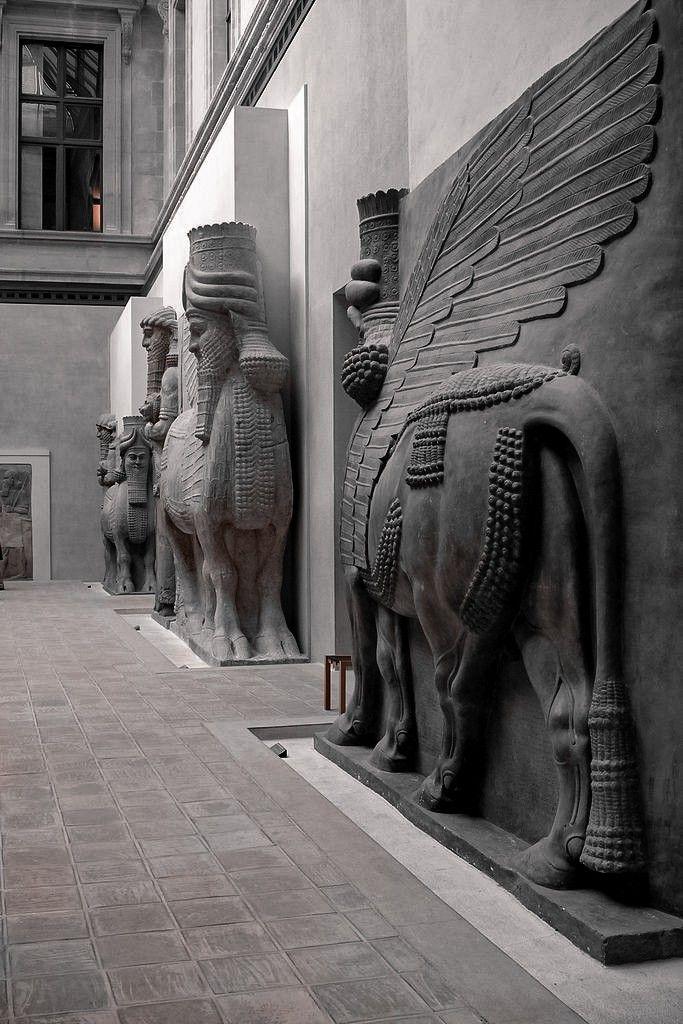
Now zoom in. It is around 2500 BCE. In southern Mesopotamia, a Sumerian farmer eyes the sky with suspicion. The Tigris has flooded hard this year, ripping through one of the mud-brick levees. In Egypt, another farmer watches the Nile rise in a slow, predictable swell. He already knows, from a simple measuring device on the riverbank, that this year’s harvest will be good.
Mesopotamia and Egypt were both river civilizations, but they were shaped by very different rivers and very different choices. By the end of this article, you will see how their origins, methods, outcomes, and legacies lined up side by side, and why “the civilization between the rivers” is not just Egypt with cuneiform.
Origins: Why did Mesopotamia and Egypt rise where they did?
Mesopotamia means “the land between the rivers,” a Greek label for the region between the Tigris and Euphrates in modern Iraq and parts of Syria and Turkey. By around 3500 BCE, small farming villages there had grown into the first true cities, places like Uruk, Ur, and Lagash in southern Mesopotamia.
Those cities did not appear out of nowhere. For thousands of years before, Neolithic farmers had been experimenting with irrigation, channeling river water to fields of barley, wheat, and date palms. The twin rivers brought rich silt, but they were unpredictable. Floods could come at the wrong time, in the wrong place, with the wrong intensity. The land was fertile but risky.
Egypt’s origin story is more linear. The Nile is a single long river running north through a narrow valley before fanning into a delta. Early farming communities appeared along its banks by around 5000 BCE. Over time, these villages coalesced into regional kingdoms in Upper Egypt (south) and Lower Egypt (north). Around 3100 BCE, a king often identified as Narmer (or Menes) unified these regions into one kingdom.
The Nile’s annual flood was regular enough to build a calendar around. Snowmelt and East African rains swelled the river in summer, flooding the fields and leaving behind a predictable layer of black silt. Egyptians could plan around this cycle. Mesopotamians had to hedge against it.
Here is a clean way to put it: Mesopotamia grew out of managing risk between two wild rivers. Egypt grew out of riding the rhythm of one steady river.
That environmental contrast shaped early politics. In Mesopotamia, city-states emerged first. Each city had its own patron god, its own ruler, its own walls. Unity was rare and fragile. In Egypt, one kingdom took shape early and, with interruptions, lasted as a recognizable state for more than two thousand years.
So what? Because the way these civilizations began, one in a fractured floodplain and one in a long narrow valley, set the pattern for how they would think about power, order, and the gods for the rest of their history.
Methods: How did they organize power, religion, and daily life?
Both civilizations invented writing, bureaucracy, and monumental architecture. They look like twins in a textbook. Up close, their methods were cousins at best.
Writing is a good place to start. In Mesopotamia, scribes pressed wedge-shaped marks into clay tablets. We call this cuneiform. It began around 3200 BCE as a way to record grain rations, temple inventories, and contracts. Over time it expanded to myths, laws, letters, and mathematics. The medium was cheap and durable. Clay is everywhere in Mesopotamia, and fired tablets can last for millennia.
Egyptian scribes used hieroglyphs, a system of pictorial signs, on stone and papyrus. Hieratic and later demotic scripts provided faster, more cursive forms for everyday writing. Papyrus was lighter and easier to carry than clay, but far less durable unless preserved in dry conditions. That is one reason why so much of what we know about Mesopotamian daily business comes from clay tablets, while Egyptian writing that survives skews toward tombs, temples, and formal inscriptions.
Both societies tied writing to power. In Mesopotamia, scribes worked for temples and palaces, recording taxes, loans, and legal decisions. In Egypt, scribes were part of a centralized bureaucracy that answered to the pharaoh. Literacy was a path into the state machine in both places, but that machine looked different.
Government structure shows the contrast clearly. Mesopotamia was a patchwork of city-states. Uruk, Ur, Kish, Lagash, later Babylon and Assur, each had its own ruler, often called a lugal or king. Alliances shifted. Wars broke out over water rights, trade routes, or prestige. Empires appeared, like Sargon of Akkad’s empire around 2300 BCE or Hammurabi’s Babylon around 1750 BCE, but they rarely held the region together for long.
Egypt, by comparison, concentrated power in one figure: the pharaoh. He was not just a king. He was a divine ruler, associated with the god Horus in life and Osiris in death. The state was more centralized, with provincial governors (nomarchs) administering regions under royal authority, at least in theory. When central power broke down, as in the First and Second Intermediate Periods, Egyptians remembered it as a lapse from the norm.
Religion mirrored these structures. Mesopotamian gods were many, powerful, and often temperamental. Each city had a main deity, like Inanna/Ishtar in Uruk or Marduk in Babylon. The famous Epic of Gilgamesh paints a world where gods can flood the earth on a whim, where humans are small and mortality is inescapable. The afterlife was a dim, dusty underworld. You went there, you stayed there, and it was not especially pleasant.
Egyptian religion leaned toward cosmic order. The key concept was ma’at, a kind of rightness and balance in the universe. The pharaoh’s job was to maintain ma’at. The Nile’s regular flood looked like proof that the universe could be kept in balance. The afterlife, for those who could afford the proper rituals and tomb goods, could be a continuation of life in an idealized form. The famous weighing of the heart ceremony promised a moral judgment and, for the justified, a good eternity.
Even daily work reflected different methods. Mesopotamian cities were dense clusters of mud-brick houses, with narrow streets and crowded courtyards. Irrigation canals crisscrossed the fields. Managing them required constant negotiation between neighboring communities, which fed into the power of local temples and city councils.
In Egypt, the narrow Nile valley meant most people lived in a ribbon of settlements along the river. The floodplain was easier to irrigate with simple basin systems. The state could organize corvée labor, pulling peasants into large projects like building dikes, temples, and, in the Old Kingdom, pyramids.
So what? Because their methods of writing, ruling, and worshiping were not just cultural quirks. They were practical responses to geography and risk, and they shaped how people in each civilization understood authority, justice, and their own place in the world.
Outcomes: What did these different methods produce?
Put Mesopotamia and Egypt side by side around 2000 BCE and you see two mature civilizations with cities, laws, and monumental architecture. Yet the outcomes of their choices look different in stability, warfare, and cultural tone.
Start with political stability. Egypt’s Old, Middle, and New Kingdoms are separated by periods of fragmentation, but the idea of “Egypt” as a single country along the Nile persisted. Dynasties rose and fell, foreign rulers like the Hyksos or later the Libyans and Nubians took power, yet they often adopted Egyptian royal styles and religion. The continuity is striking.
Mesopotamia, by contrast, cycled through city-states and empires with dizzying speed. Sumerian city-states gave way to the Akkadian Empire, which collapsed. The Third Dynasty of Ur tried to rebuild central control, then fell. Babylon rose under Hammurabi, then declined. Assyria built a fearsome empire, then was destroyed. Each regime borrowed from its predecessors, but there was no single, continuous state identity for “Mesopotamia.”
Law codes show another outcome. Hammurabi’s Code, carved on a stele around 1750 BCE, is one of the best known Mesopotamian texts. It lays out penalties for theft, assault, property disputes, and more, often varying by social status. The famous “eye for an eye” principle appears here, but applied within a stratified society. Law in Mesopotamia looks like an attempt to impose order on a contentious, unequal world.
Egypt also had legal traditions, but no single law code like Hammurabi’s has survived. Royal decrees, court records, and instructions suggest that justice was tied to ma’at and to the pharaoh’s role as guarantor of order. The absence of a monumental law code may reflect a different political culture, one that saw law as flowing from the king and cosmic order rather than from a set of carved statutes.
Art and architecture are where casual observers often confuse the two. Both built temples. Both carved statues. Both used hieratic scale, making kings and gods larger than ordinary people in art.
Yet their buildings send different messages. Mesopotamian cities were dominated by ziggurats, tiered temple platforms of mud-brick with shrines on top. The ziggurat of Ur, for example, rose above the city like a man-made mountain. These were not tombs. They were stairways between earth and heaven, where gods might descend and rituals took place.
Egypt’s most famous monuments, the pyramids of Giza, are tombs. The Great Pyramid of Khufu, built around 2550 BCE, locked a king’s body and grave goods inside a geometric mountain of stone. Later, rock-cut tombs in the Valley of the Kings continued the idea of elaborate royal burials tied to the afterlife. Temples, like Karnak and Luxor, were separate complexes for worship and royal propaganda.
Even their attitudes toward death diverged. Mesopotamian texts rarely dwell on personal immortality. The Epic of Gilgamesh has its hero fail in his quest for eternal life, concluding that human beings should accept mortality and focus on their earthly achievements. Egyptian texts, from the Pyramid Texts to the Book of the Dead, obsess over the journey after death, the spells, passwords, and moral tests needed to secure a good eternity.
So what? Because the outcomes of their different methods produced two very different emotional worlds: a Mesopotamia of fragile order, legal codes, and anxious myths, and an Egypt of long continuity, monumental tombs, and carefully managed hope for the afterlife.
Legacy: What did Mesopotamia and Egypt leave to later ages?
Both civilizations are long gone, but they left deep marks on later cultures, including our own. Their legacies are not identical, and they are not always where popular imagination puts them.
Mesopotamia’s most direct legacy is in writing, law, and science. Cuneiform was adapted to write multiple languages: Sumerian, Akkadian, Babylonian, Assyrian, Hittite. For more than two thousand years, it was the script of diplomacy and scholarship in the Near East. When Egyptian scribes wrote letters to foreign kings in the 14th century BCE, they often used Akkadian cuneiform, not hieroglyphs.
Mesopotamian scholars developed sexagesimal (base-60) mathematics. Our 60-minute hour and 360-degree circle trace back to those clay tablets. They recorded astronomical observations, tracked planetary movements, and created omen literature that linked celestial events to earthly outcomes. Their way of systematizing the sky fed into later Babylonian and then Greek astronomy.
Legal traditions in the region, from Hammurabi’s Code onward, influenced how later empires thought about written law. While it is too simple to say “Hammurabi invented law,” his stele is a clear early example of a ruler presenting himself as a source of justice under divine authority. That model echoes, in different forms, in later Near Eastern and Mediterranean states.
Egypt’s legacy is more visible in art, religion, and cultural memory. Greek and Roman visitors were fascinated by Egypt’s antiquity. Herodotus wrote about Egyptian customs with a mix of admiration and confusion. Greek philosophers associated Egypt with ancient wisdom. Later, in the Hellenistic period, Egyptian and Greek religious ideas blended in cults like that of Serapis.
Egyptian art, with its strict conventions of profile heads and frontal shoulders, its use of hieroglyphs as both text and decoration, and its monumental stone architecture, became a symbol of ancient power. From Napoleon’s campaigns to 19th-century “Egyptomania,” Western culture has repeatedly used Egyptian imagery to evoke age, mystery, and authority.
Religiously, some ideas traveled in subtle ways. Concepts of judgment after death, of a moral weighing of the soul, appear in Egyptian texts long before similar imagery shows up in later Mediterranean religions. Direct lines of influence are hard to prove, but Egypt’s long experimentation with afterlife beliefs formed part of the broader religious environment that later Judaism, Christianity, and Islam grew in.
There is also the legacy of how we discovered them. Cuneiform was deciphered in the 19th century through the work of scholars like Henry Rawlinson, who copied and studied the trilingual Behistun inscription in Iran. Hieroglyphs were cracked after Jean-François Champollion used the Rosetta Stone, with its Greek and Egyptian texts, in the 1820s. The fact that Mesopotamian texts are mostly on clay and Egyptian texts often on stone or papyrus has shaped what survives and how we imagine each culture.
So what? Because their legacies show that “the civilization between the rivers” and the kingdom of the Nile did not just mirror each other. Mesopotamia fed into the ways we count time, write laws, and map the sky. Egypt fed into the ways we picture ancient power, imagine the afterlife, and tell stories about lost kingdoms.
Why do people confuse Mesopotamia and Egypt, and what does that hide?
On Reddit threads and in classrooms, people often mash Mesopotamia and Egypt together. Pyramids? Ziggurats? Was Hammurabi Egyptian? Did Mesopotamians build pyramids? The confusion is common because the broad strokes are similar: early, river-based, polytheistic, with kings and monumental buildings.
They look similar because both are early agricultural civilizations that grew up around major rivers and had to organize labor, belief, and power to manage water and surplus. Both invented writing. Both built on a large scale. Both left ruins that impress modern visitors.
But that mental shortcut hides real differences. Mesopotamia was never a single, long-lived kingdom like Egypt. Its political map was crowded and constantly shifting. Its rivers were harder to predict. Its gods were more volatile. Its law codes more explicit about social hierarchy.
Egypt, by contrast, had long stretches of centralized rule under a divine king. Its river was regular enough to become a symbol of cosmic order. Its art and tombs obsessed over continuity and the afterlife.
There is another hidden piece. When we say “the civilization between the rivers,” we often speak as if there was one Mesopotamian civilization. In reality, there were many: Sumerian, Akkadian, Babylonian, Assyrian, and others, each with its own language phases, dynasties, and innovations. Egypt had variation too, but its cultural and political continuity makes it easier to talk about as a single thread.
So what? Because separating Mesopotamia and Egypt in your mind, and then comparing them on the same axes, turns two blurred textbook pictures into distinct societies with their own logic, problems, and solutions. That is where the history gets interesting.
Frequently Asked Questions
Why are Mesopotamia and Egypt considered river civilizations?
Mesopotamia and Egypt are called river civilizations because their early farming, cities, and states depended on major rivers. Mesopotamia grew between the Tigris and Euphrates, which brought fertile silt but unpredictable floods. Egypt developed along the Nile, whose regular annual flood created a reliable farming cycle. Both societies organized irrigation, labor, and government around managing these rivers.
What is the main difference between Mesopotamian and Egyptian religion?
Mesopotamian religion featured many city-based gods who were powerful and often unpredictable. Myths like the Epic of Gilgamesh portray a world where humans are small and the afterlife is a gloomy underworld. Egyptian religion centered on maintaining cosmic order, called ma’at, with the pharaoh as its guardian. Egyptians developed detailed beliefs about judgment after death and a potentially pleasant afterlife for those who passed moral and ritual tests.
Did Mesopotamians and Egyptians both build pyramids?
No. Egyptians built pyramids as monumental tombs for their kings, especially during the Old Kingdom, with the Great Pyramid of Giza as the best-known example. Mesopotamians built ziggurats, which were stepped temple platforms made of mud-brick with shrines on top. Ziggurats were not tombs but religious centers where priests performed rituals and where gods were believed to descend.
How did Mesopotamian and Egyptian writing systems differ?
Mesopotamians used cuneiform, wedge-shaped marks pressed into clay tablets, to write several languages such as Sumerian and Akkadian. It began as a record-keeping tool and expanded to literature, law, and science. Egyptians used hieroglyphs on stone and papyrus, along with cursive scripts like hieratic and demotic for everyday use. Papyrus made Egyptian texts portable but less durable than clay tablets, which is why more routine records survive from Mesopotamia.