At first, the staff thought the sunfish was just sulking.
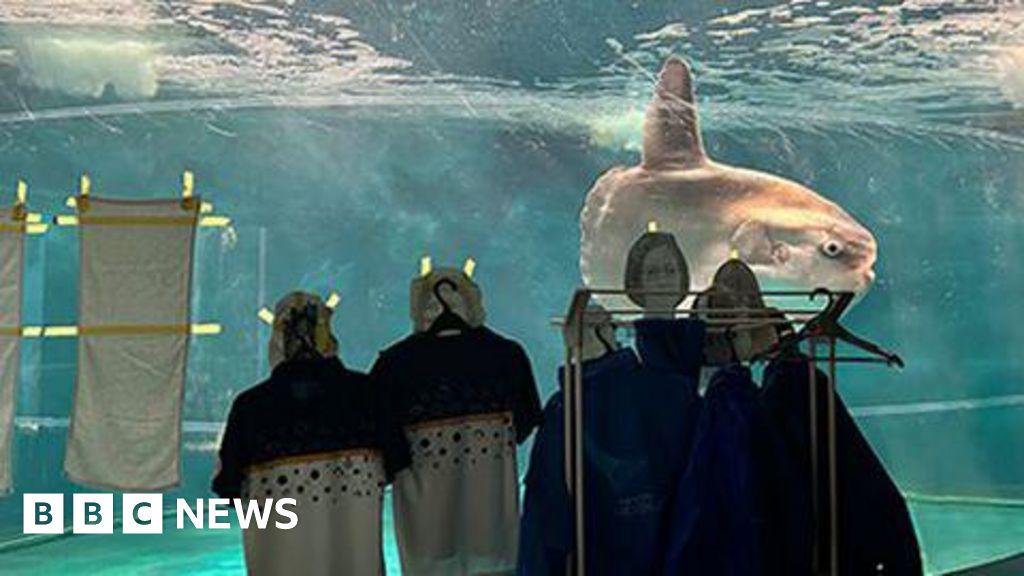
Renovations had closed the Japanese aquarium to visitors. The building was full of drills and ladders, but the public galleries were quiet. Too quiet. In one of those galleries, a giant ocean sunfish, or mola, drifted in slow circles and stopped eating.
Veterinarians checked for disease. The water quality was fine. The diet had not changed. Yet the fish kept refusing food. Then someone tried something that sounded like a joke: they taped photos of people’s faces near the tank.
The sunfish perked up. It started eating again.
That story, shared online and turned into a viral Today I Learned post, sounds like a Pixar short. A lonely fish misses its audience so much that it needs cardboard humans. But behind the meme is a real question that scientists and zoo keepers wrestle with every day: how much do captive animals care about us, and what happens when we suddenly disappear?
What was this “lonely sunfish” case, really?
The viral claim is simple: a sunfish in a Japanese aquarium became so lonely during a renovation closure that it stopped eating, then recovered when staff put up photos of people’s faces. The core facts line up with what aquarists say they see all the time, even if the specific aquarium and date are hard to pin down from public records.
Ocean sunfish, genus Mola, are huge, flat, slow-moving fish that can reach more than 2,000 kilograms. Japan has a particular fondness for them. Several aquariums, including Kamogawa Sea World, Osaka Aquarium Kaiyukan, and Aquamarine Fukushima, have kept sunfish and written about how oddly sensitive they are. Keepers routinely describe them as easily stressed, prone to bumping into walls, and surprisingly responsive to changes around their tanks.
There is no widely cited scientific paper that says, “On this date, in this aquarium, a sunfish was cured by photos.” The story likely comes from internal reports or media interviews that were later summarized and passed around in Japanese, then picked up by English-language sites and Reddit. That makes some details fuzzy, but the pattern itself is not unusual.
Many captive animals change their behavior when visitor numbers suddenly drop or spike. Zoos reported this during COVID-19 closures. Gorillas watched construction workers instead of guests. Penguins went on walks through empty halls. Some animals relaxed. Others seemed bored or unsettled. The sunfish story is a vivid version of a broader pattern: animals notice us.
So what? The “lonely sunfish” is best understood as one case in a larger question about how human presence shapes captive animals’ mental health, not as a one-off fairy tale.
What set it off: why would a sunfish stop eating when people vanish?
To make sense of this, you have to think like a fish, or at least try.
In the wild, a sunfish’s world is full of movement. Light shifts with waves. Plankton blooms. Predators pass. Boats and divers appear. In an aquarium, that world shrinks to glass walls, filtered water, and a daily routine. The most unpredictable thing is often the visitors.
For a large, long-term captive fish, visitors are part of the environment. They are moving shapes. They bring noise, light, and sometimes feeding demonstrations. Over months or years, the animal’s internal clock can sync to this rhythm: mornings are quiet, afternoons are busy, evenings calm down again.
Then renovations hit. Visitor numbers drop to zero almost overnight. The front of the tank, usually full of motion, becomes a blank wall. The soundscape changes from diffuse crowd noise to construction clanks at odd times. For a sensitive species like a sunfish, that is a major environmental shift.
Fish are not robots. They have stress responses governed by hormones like cortisol, just as mammals do. Sudden changes in light, noise, or social environment can trigger chronic stress, which often shows up first as a loss of appetite. Aquarists see this when they move fish between tanks, change tank mates, or alter feeding routines.
So did the sunfish feel “lonely” in a human sense? That word is probably more poetic than precise. What we can say is that it lost a familiar stimulus that had become part of its daily environment. The absence of people was a change, and for a fragile, easily stressed animal, that change likely tipped its stress levels high enough to suppress feeding.
So what? The trigger was not magic empathy for humans but a sudden environmental shift that removed a major source of visual and social stimulation from an already artificial life.
The turning point: why did photos of faces help?
The photos are the part everyone remembers. They sound absurd. Why would a fish care about flat images taped to glass?
There are a few plausible explanations, none of which require the sunfish to “recognize” humans the way a dog does.
First, movement and contrast. Human faces in photos are high-contrast shapes. When staff walk by or adjust things, those photos move slightly, catch light, and create flickers at the edge of the fish’s vision. That can mimic the visual busyness of a normal visitor day, especially if the photos are placed where crowds usually gather.
Second, association. If the sunfish had been fed during public demonstrations, it might have learned that the presence of humans near the glass often predicted food. Fish are very good at simple associations. Salmon learn feeding times. Reef fish learn which divers bring food. The photos, plus staff activity near the glass, might have been enough to restore that learned link: “things near this side of the tank mean feeding time.”
Third, keeper behavior. When staff are worried about an animal that is not eating, they tend to hover. They check more often. They talk near the tank. They try different foods. When they put up the photos, they were also changing their own behavior, which changed the whole pattern of activity around the sunfish. The fish may have been responding to that richer environment as much as to the photos themselves.
There is also a simpler possibility: coincidence. Appetite in stressed animals can return on its own once the worst of the shock passes. The photos might have gone up at the same time the fish was going to start eating again anyway. Without a controlled experiment, you cannot separate cause from timing with certainty.
Still, the story fits a known pattern. Zookeepers sometimes use cardboard cutouts, mirrors, or screens to give animals more visual stimulation when visitor numbers are low. Some aquariums have played videos for octopuses or dolphins. The sunfish photos are just a particularly human-flavored version of that trick.
So what? The turning point was not that the fish “saw faces” and felt loved, but that its environment regained some of the visual complexity and learned signals it had lost, enough to reduce stress and restart normal feeding.
Who drove it: keepers, vets, and the quiet work of animal care
Stories like this tend to flatten into “smart fish” or “miracle cure.” The real drivers are usually the keepers and veterinarians who know their animals well enough to try something odd.
In Japanese aquariums that keep sunfish, staff often write about them in newsletters and blogs. They describe the fish as “delicate” and “easily startled.” They pad tank corners so the fish do not injure themselves. They adjust lighting and water flow carefully. That level of attention comes from long hours of watching how a particular animal reacts to small changes.
When an animal stops eating, the standard response is methodical. Check water chemistry. Check for parasites or infections. Review any recent changes in diet or tank mates. If nothing obvious shows up, staff start thinking about stress and enrichment. What did the animal lose? What can we add back?
In this case, someone on that team made a leap: if the fish is used to people, maybe we can fake people. It sounds silly enough that you can imagine the conversation in the staff room. But aquarists are used to trying low-risk experiments. If a weird idea might help and will not harm the animal, they will often give it a shot.
There is a parallel here with what happened during COVID-19 closures. Around the world, keepers noticed that some animals seemed less active or less engaged without visitors. Zoos responded by walking penguins through empty exhibits, bringing animals to look at each other, or setting up new toys and puzzles. The people who drove those changes were not social media teams. They were the keepers who saw boredom and stress in the animals’ daily routines.
So what? The sunfish story is as much about human caretakers experimenting with enrichment and paying attention to behavior as it is about a fish “missing” people.
What it changed: from cute anecdote to serious questions about enrichment
On Reddit, the sunfish story spread because it felt like a punchline: a fish so attached to its fans that it needed a cardboard crowd. But in zoo and aquarium circles, stories like this feed into a larger shift in how institutions think about animal welfare.
For much of the 20th century, the bar for captive animals was simple survival. If an animal ate, reproduced, and did not die early, that was considered success. Enclosures were often bare and easy to clean. Visitor experience mattered more than the animal’s mental life.
Today, the standard is higher. Many modern zoos and aquariums talk about “positive welfare” or “a life worth living.” That means not just avoiding suffering, but actively providing animals with choices, challenges, and stimulation. Enrichment programs, which used to be seen as optional extras, are now central to daily care.
Visitor presence is part of that equation. Research has shown that some species, like big cats, can become more stressed when crowds are noisy or press close to the glass. Others, like some primates and parrots, seem to enjoy watching people and may even perform for them. During COVID-19, several zoos reported that animals like otters, meerkats, and some birds appeared less active without guests.
The sunfish story pushes that conversation into the aquatic world. Fish are often treated as less sentient or less emotionally complex than mammals. Yet here is a case, plausible and consistent with keeper reports, where a fish’s feeding behavior changed dramatically in response to human absence and then to human-like stimuli.
That does not mean fish are just wet dogs. It does mean that their welfare depends on more than water quality and calories. Visual complexity, routine, and learned associations with people all shape their mental state.
So what? The anecdote adds weight to a growing view that enrichment, including how and when animals see people, is not a luxury but a core part of keeping them healthy in captivity.
Why it still matters: what a sunfish tells us about animals and us
The lonely sunfish story keeps coming back online because it hits a nerve. People want to believe that animals notice them. They also worry about what captivity does to wild creatures.
On one level, the lesson is straightforward. Captive animals, even fish, are sensitive to changes in their environment. Human presence can be a stressor or a form of enrichment, depending on the species and the setting. When that presence disappears, some animals struggle.
On another level, the story forces an uncomfortable question: if a fish can become so dependent on the rhythm of human visitors that it stops eating when they vanish, what does that say about the trade-offs of captivity?
Modern aquariums justify keeping large, wide-ranging species like sunfish by pointing to education and conservation. Visitors who see a giant mola up close might care more about ocean ecosystems. Breeding programs can help maintain genetic diversity. But those benefits come with costs to individual animals, who live in spaces far smaller and simpler than the open sea.
The sunfish that needed photos of faces is a reminder that captivity shapes not just bodies but minds. It creates animals whose daily reality includes us as a constant presence. When we treat them as living exhibits, we become part of their psychological environment whether we intend to or not.
There is a practical takeaway too. As climate change, pandemics, and economic shocks disrupt visitor patterns, zoos and aquariums will face more sudden shifts in human traffic. Planning for animal welfare now means asking: what happens to the animals when the crowds vanish, not just when they arrive?
So what? A single sunfish in Japan, real or not in every detail, has become a shorthand for a larger truth: animals in our care are watching us, adapting to us, and sometimes missing us when we go. How we respond to that says a lot about what kind of custodians we want to be.
Frequently Asked Questions
Did a Japanese sunfish really start eating again after seeing photos of people?
The story about a Japanese aquarium sunfish that stopped eating during renovations and recovered when staff put up photos of people’s faces is widely shared online and consistent with what keepers report about sensitive fish. However, there is no single, well-documented scientific paper naming the exact aquarium and date, so some details are likely based on internal reports and media summaries rather than formal research.
Can fish actually recognize human faces?
Some fish can distinguish between individual human faces. Studies on archerfish and cichlids have shown that they can learn to pick out specific faces from photos with high accuracy. That does not mean they think about faces the way we do, but it shows that their visual processing is good enough to tell people apart and form simple associations, such as linking a person with food.
Do zoo and aquarium animals miss visitors when places close?
During COVID-19 closures, many zoos and aquariums reported behavior changes when visitors disappeared. Some animals, like big cats, seemed more relaxed. Others, such as otters, meerkats, and some primates and birds, appeared less active or more easily bored. Keepers responded by increasing enrichment, arranging animal “field trips” inside the zoo, or adding new toys and puzzles to replace the lost stimulation from crowds.
Why would a sunfish stop eating during aquarium renovations?
Ocean sunfish are known to be easily stressed in captivity. Renovations can bring big changes in noise, light, and daily routine, including the sudden loss of visitors in front of the tank. Such environmental changes can trigger chronic stress, which often shows up first as a loss of appetite. When staff restored some of the visual stimulation near the tank, including photos and increased activity, the fish’s stress likely eased enough for normal feeding to resume.