Her body was found on the floor of a burning tent in Balad, Iraq, on July 19, 2005. A gunshot wound to the head. A rifle too long for her arms. Bruises, broken teeth, a busted lip, chemical burns on her genitals. Within days, the U.S. Army told her parents it was suicide.
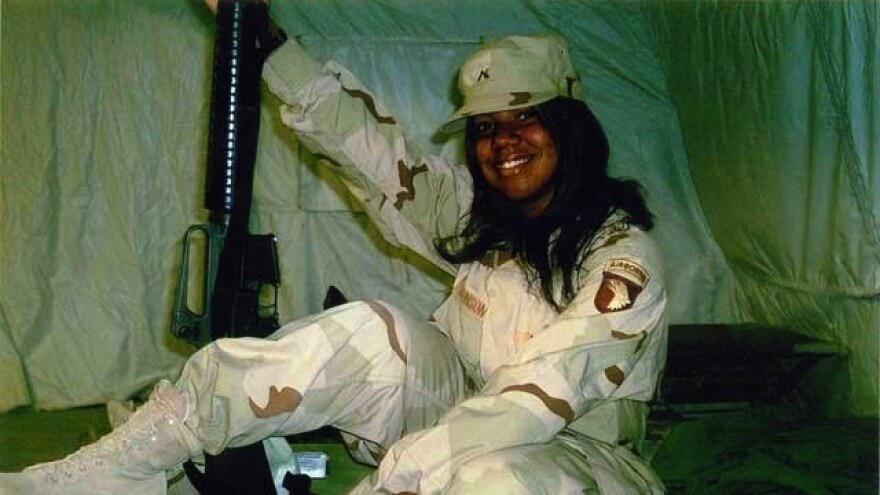
Her name was Pfc. LaVena Lynn Johnson. She was nineteen.
One year earlier, in the mountains of Afghanistan, another American in uniform was shot to death. He was a former NFL safety, a national hero, killed in what the Army first called a bold firefight with the enemy. Only later did the truth emerge: Army Ranger Cpl. Pat Tillman had been killed by his own side.
They look similar because both cases mix a dead soldier, a tidy official story, and a pile of physical evidence that does not match. LaVena Johnson and Pat Tillman died in different wars, in different ways, but their stories follow the same arc: a suspicious death, a fast narrative, and families forced to become investigators. By the end of this article you will see how their origins, methods, outcomes, and legacies line up, and what that says about how the U.S. military handles its own scandals.
LaVena Johnson’s death in Iraq was ruled a suicide despite extensive injuries and signs of possible sexual assault. Pat Tillman’s death in Afghanistan was first reported as heroic combat, then exposed as friendly fire. Both cases show how the U.S. Army can distort or delay the truth about soldiers’ deaths.
Origins: Two Very Different Soldiers, One Institution
LaVena Johnson grew up in Florissant, Missouri, outside St. Louis. By all accounts she was studious, shy, and determined. She joined the Army straight out of high school in 2003, hoping to earn money for college. In May 2005 she deployed to Iraq with the 129th Corps Support Battalion, based at Balad, a large logistics hub.
Her family says she loved the Army at first. Phone calls home were upbeat. She talked about coming back to study psychology. Then, in mid-July 2005, the calls changed. Her father, Dr. John Johnson, later recalled that she sounded stressed and said she might not be home for Christmas. A few days later, the Army notified the family that LaVena was dead, and that she had killed herself.
Pat Tillman’s path could not have looked more different on paper. Born in 1976 in California, he became a star football player at Arizona State University. The Arizona Cardinals drafted him in 1998. By 2001 he was an NFL starter with a multi-million dollar contract offer on the table.
After the September 11 attacks, Tillman turned that offer down. In 2002 he enlisted in the U.S. Army with his brother Kevin. They trained as Rangers. In April 2004, during his second deployment, this time in Afghanistan, Tillman was killed while on patrol in Khost Province.
Within hours, the Army told his family and the public that he had died fighting the enemy. The story fit perfectly with the image of a patriotic athlete who had given up fame and money to serve.
Two very different recruits, one a teenage private and one a famous Ranger, but both were absorbed into the same institution. That shared context matters because the Army’s culture and public-relations instincts shaped how both deaths were explained.
So what? The contrast in their backgrounds throws the constant into relief: whether a little-known private or a national celebrity, both were subject to the same closed system of military investigation and messaging.
Methods: How the Official Stories Were Built
In both cases, the military moved quickly to define what had happened. The method was the same: establish a simple narrative, control the flow of information, and hope the family accepts it.
For LaVena Johnson, the Army told her parents that she had shot herself with her M16 rifle in a contractor’s tent on base. They said she was distraught over a breakup. The official manner of death was suicide.
When the Johnson family pressed for details, they hit a wall. The Army delayed releasing the autopsy report and photographs. When the family finally obtained them, with the help of a Freedom of Information Act request and a sympathetic congressman, the images did not match the story.
They saw a broken nose, black eye, loose teeth, and deep bruising on her body. There were chemical burns on her genitals, which an independent forensic pathologist later suggested could be from a substance used to destroy DNA evidence. The bullet wound was inconsistent with a classic self-inflicted rifle shot. The exit wound was on the top of her head. The rifle, when measured, appeared longer than her arm span, raising questions about how she could have pulled the trigger.
There were also reports of blood outside the tent and signs that her body may have been moved. The tent itself had been set on fire. Yet the Army’s Criminal Investigation Command (CID) stuck to suicide and did not charge anyone with assault or homicide.
In Pat Tillman’s case, the first method was mythmaking. The Army drafted a Silver Star citation that described him charging up a hill under enemy fire. On April 24, 2004, the day after his death, the Army told his family and the media that he had been killed in an ambush by Taliban fighters.
Within days, officers in his chain of command knew that friendly fire was likely. Soldiers on the ground had reported that he was hit by rounds from another American unit in poor visibility. But that information did not reach his family. The public story stayed heroic.
Only weeks later, just before a high-profile memorial service, did the Army quietly open a friendly-fire investigation. Even then, the Tillman family was not clearly told. They learned the truth in late May 2004, about a month after his death, and only after pressing for answers.
In both cases, the method was not a single lie. It was a series of decisions: what to say first, what to omit, what to delay, and when to admit that the first story was wrong, if at all.
So what? The way the Army shaped the initial narratives in both deaths shows how institutional self-protection can take priority over full transparency, especially in wartime.
Evidence vs Narrative: Suicide, Friendly Fire, and Forensics
LaVena Johnson’s death was ruled a suicide despite physical evidence that many independent observers find deeply inconsistent with that conclusion. Pat Tillman’s death was eventually acknowledged as friendly fire, but only after the original heroic combat story collapsed under its own weight.
In Johnson’s case, the Army pointed to a gunshot wound and a supposed history of emotional distress. Her family and outside experts pointed to everything else. The bruises and broken teeth suggested a beating. The chemical burns suggested an attempt to destroy sexual-assault evidence. There were reports of a trail of blood leading away from the tent, and of a flammable substance used to start the fire.
The Army’s CID argued that the injuries could be from the fall or from efforts to move her body. They did not, however, bring charges against anyone for assault, rape, or arson. No one was prosecuted in connection with her death. The case has never been reopened, despite years of lobbying by her family and supporters.
For Tillman, the evidence of friendly fire was clearer and harder to bury. Soldiers in his platoon knew that the shots had come from another American unit. Ballistics and autopsy reports showed that he had been struck by three closely grouped rounds to the head, fired from an American M16 at close range. There were no enemy shell casings or bodies found at the scene.
After the friendly-fire truth emerged, the Army conducted multiple investigations. They concluded that Tillman’s death was accidental, caused by confusion and poor communication between units. Several officers were reprimanded for failing to report the friendly-fire suspicion promptly and for allowing the false heroic narrative to go forward.
The Tillman family was not satisfied. They argued that the Army had engaged in a deliberate cover-up to protect its image and to use Pat as a recruiting symbol during an unpopular war. Congressional hearings in 2007 examined the case and criticized the military for deception, but did not find a criminal conspiracy.
In both cases, the official story rested on a narrow reading of the evidence. In Johnson’s case, the suicide ruling ignored or explained away injuries consistent with assault. In Tillman’s case, the initial ambush story ignored eyewitness reports and ballistics that pointed to friendly fire.
So what? The gap between physical evidence and official narrative in both deaths shows how cause-of-death labels like “suicide” or “killed in action” can be shaped as much by institutional needs as by forensics.
Outcomes: Families as Investigators and Public Pressure
Once the initial shock passed, both families did something the Army likely did not expect. They refused to accept the first story and turned themselves into investigators.
Dr. John Johnson, LaVena’s father, is a retired Army veteran himself. He used his knowledge of the system to file records requests, contact members of Congress, and push for a new investigation. The family created a website, shared the autopsy photos, and worked with activists who saw LaVena’s case as part of a wider pattern of mishandled sexual-assault and suspicious-death cases in the military.
The Johnsons asked for congressional hearings. They met with lawmakers. They presented evidence that, in a civilian context, would likely have triggered a homicide inquiry. The Army refused to change the ruling. To this day, LaVena’s death is officially listed as a suicide.
The Tillman family had more public leverage, because Pat was already famous. His parents and brother Kevin used that visibility to press for answers. They read thousands of pages of redacted documents. They spoke to soldiers who had been ordered not to talk. They went public with their anger at the Army’s handling of the case.
The pressure worked, at least partly. In 2005 and again in 2007, the Pentagon released new reports acknowledging friendly fire and criticizing officers for mishandling the information. Congressional hearings put generals and Bush administration officials under oath. The image of Pat Tillman as a simple war hero was replaced by something messier and more human.
Yet even in the Tillman case, the family felt stonewalled. They believed that the Army and perhaps higher officials had coordinated the initial false narrative. The investigations blamed mid-level officers and communication failures, not a deliberate top-down cover-up.
For LaVena’s family, the outcome was harsher. Without a famous name or a clear internal admission of error, they hit a harder ceiling. They gained public sympathy, especially as her story spread online, but they did not get a new official ruling or a new investigation.
So what? The different outcomes show how power and visibility shape justice. A famous white male Ranger’s family forced partial accountability. A Black teenage private’s family is still fighting to get her case even recognized as suspicious.
Legacy: What LaVena Johnson and Pat Tillman Changed
Both deaths left marks far beyond their units or families. They fed into wider debates about honesty, accountability, and who gets believed when things go wrong in uniform.
Pat Tillman’s case became shorthand for wartime spin. His story is now taught in journalism and military-ethics courses as an example of how the desire for heroes can distort the truth. The phrase “Tillman case” is often used in discussions about friendly fire and public-relations manipulation.
The scandal did not end friendly fire, which is a grim constant in war. It did, however, make it harder for the military to hide it. The Army tightened reporting rules and emphasized the need to inform families promptly if friendly fire is suspected. Whether those rules are always followed is another question, but the Tillman case raised the political cost of lying.
LaVena Johnson’s legacy is quieter but no less sharp. Her name appears in lists of suspicious deaths of women in the military, alongside cases like Pfc. Tina Priest and Spc. Ciara Durkin. Activists point to her case as evidence that sexual assault and violence against women in uniform can be buried under labels like “suicide” or “accident.”
Her story has fueled campaigns for reform of the military justice system, especially around sexual assault. It has been cited in arguments for taking prosecution of such cases out of the chain of command and giving more power to independent prosecutors. It also intersects with conversations about race, since Black women in the military often report being disbelieved or dismissed when they report harassment or assault.
Online, the photograph of LaVena in uniform, smiling, circulates every July with reminders that her case is unresolved. The Reddit post you saw is part of that afterlife. People are drawn to the sheer mismatch between the official word “suicide” and the injuries described. They sense that something is off, even if they do not know all the details.
Both cases have also changed how some families of service members react to bad news. There is now a template: ask for the full autopsy, demand the CID file, question inconsistencies, and do not assume that the first story is the whole story.
So what? Together, the legacies of LaVena Johnson and Pat Tillman have made it harder for the U.S. military to control the narrative around suspicious deaths, and they have given future families a script for pushing back.
Why These Two Stories Keep Getting Compared
They look similar because in both cases, the institution’s first instinct was to protect itself, not to tell the whole truth. The details differ. A suspected sexual assault in a tent in Iraq. A friendly-fire death on a rocky Afghan hillside. But the pattern is the same.
Origins: a young Black woman from Missouri and a white NFL star from California both trusted the Army with their lives. Methods: in both deaths, the Army crafted an initial story that minimized embarrassment and controversy. Outcomes: both families had to become detectives, but only one got formal acknowledgment of wrongdoing. Legacy: both names now float through debates about military justice and honesty, but one is widely known and the other is still being discovered by people scrolling through old photos online.
LaVena Johnson’s death in 2005 and Pat Tillman’s death in 2004 are not identical cases. One is officially a suicide, the other officially friendly fire. One involves suspected sexual violence, the other a botched combat operation. Yet comparing them makes something clear that each case alone might not.
When the U.S. military is both the actor and the investigator, truth can become negotiable. The more embarrassing the facts, the stronger the temptation to smooth them out. That is why these two names keep coming up together, and why people still argue about what really happened in a tent in Balad and in a canyon in Khost.
So what? The comparison matters because it shows that LaVena Johnson’s case is not an isolated mystery but part of a broader pattern of contested military deaths, which affects how we should read any official story that arrives neatly packaged from a war zone.
Frequently Asked Questions
Who was LaVena Johnson and what happened to her in Iraq?
Pfc. LaVena Lynn Johnson was a 19-year-old U.S. Army soldier from Missouri, deployed to Balad, Iraq, in 2005. On July 19, 2005, she was found dead in a contractor’s tent with a gunshot wound, extensive bruising, broken teeth, and chemical burns on her genitals. The Army ruled her death a suicide, but her family and independent experts argue the evidence points to assault, possible sexual violence, and a staged scene. Her case has never been officially reopened.
How did Pat Tillman really die in Afghanistan?
Cpl. Pat Tillman, a former NFL player turned Army Ranger, was killed on April 22, 2004, in Afghanistan. The Army initially reported that he died in a firefight with enemy forces. Later investigations showed he was killed by friendly fire, shot by soldiers from his own unit in poor visibility. The Army admitted it mishandled the information and allowed a false heroic combat story to circulate for weeks before telling his family the truth.
Why are the deaths of LaVena Johnson and Pat Tillman often compared?
Their deaths are compared because in both cases the U.S. Army quickly issued a simple, reassuring narrative that did not match the underlying evidence. Johnson’s death was labeled a suicide despite injuries consistent with assault. Tillman’s death was described as heroic combat when it was actually friendly fire. In both cases, families had to fight for records and answers, exposing how the military can shape or delay the truth about controversial deaths.
Has the U.S. military ever changed its ruling in the LaVena Johnson case?
No. Despite years of advocacy by her family, activists, and some members of Congress, the U.S. Army has not changed its ruling that Pfc. LaVena Johnson died by suicide. The Army’s Criminal Investigation Command has maintained that conclusion, and no one has been charged in connection with her death. Her family continues to argue that the evidence warrants a homicide investigation.