They look similar because fantasy artists borrow heavily from real medieval armor. But the knight of the Holy Roman Empire you see in paintings or game art is usually a mash‑up: part historical, part imagination, part Hollywood.
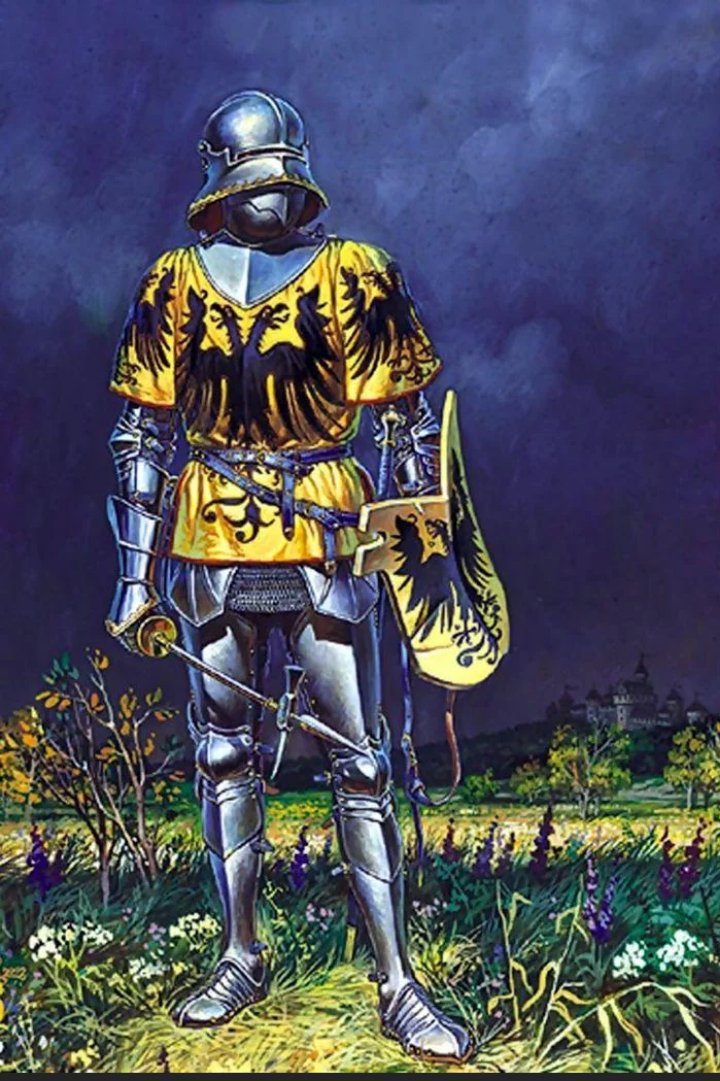
When people on Reddit ask “what is this armor and weapon called?” under a dramatic knight image, they are usually looking at something that feels authentic but is not quite right. The helmet shape is off by a century. The shield is too small or too big. The weapon looks like a mix between a spear and a halberd. It feels medieval, but it is not tied to a specific time or place.
Real Holy Roman Empire knights used specific armor types, helmets, weapons, and shields that changed over time. Fantasy knights use whatever looks cool. By the end of this, you will be able to look at an image and say: that part is real, that part is nonsense, and that part is “inspired by” but not accurate.
What was a real Holy Roman Empire knight, and what was fantasy?
Start with the basics. A knight of the Holy Roman Empire was not a special order of warrior with unique armor. He was a mounted, heavily armed noble or ministerialis inside a very loose empire that covered much of Central Europe from the 10th to early 19th century.
In the 12th century that knight might be a vassal of the Staufer emperors, fighting in Italy in a mail hauberk and conical helmet. In the 15th century he might be a Swabian noble in full plate, serving Emperor Frederick III or Maximilian I. Same social role, very different kit.
Fantasy art, on the other hand, tends to compress 400 years of development into one figure. You get a 15th‑century German sallet helmet, 14th‑century heater shield, 13th‑century surcoat, and a weapon that never really existed, all on the same guy. He is labeled “Knight of the Holy Roman Empire” because that sounds grand.
A Holy Roman Empire knight was a real social and military role tied to land, vassalage, and imperial politics. A fantasy “HRE knight” is a visual collage built from whatever armor pieces read as “medieval” to a modern viewer. That difference is the starting point for sorting real equipment from artistic invention.
Origins: where did real armor and weapons come from?
Medieval armor did not appear fully formed. It evolved slowly from late Roman and early medieval gear. In the 11th and 12th centuries, a knight in the German lands of the empire looked a lot like his French or Norman counterpart: long mail shirt (hauberk), mail coif, conical helmet with nasal, kite shield, spear, and sword.
By the 13th century, the classic “great helm” appears: a big cylindrical or boxy helmet covering the whole head, often worn over a mail coif and padded hood. Surcoats and heraldic shields become more standardized. The heater shield, a shorter and more triangular descendant of the kite shield, becomes common.
In the 14th century, armorers in German towns like Augsburg and Nuremberg start producing more plate pieces. First limb protection over mail, then breastplates, then by the late 14th and early 15th century, full plate harness. The sallet helmet, with its swept back tail and separate bevor for the throat, becomes a very “German” silhouette in the 15th century.
Weapons follow a similar path. Early knights rely on spear and sword. From the 13th century on, you see more specialized polearms: glaives, bills, and in the German regions, the halberd. By the 15th century, the knight might carry a lance for the charge, then switch to a sword, mace, or war hammer in close combat.
Fantasy armor has a different origin story. It grows out of 19th‑century romantic paintings, Victorian armor collections, and 20th‑century film and game design. Artists flip through books of armor photos, pick their favorite shapes, and combine them. They are not bound by what a Nuremberg armorer could actually make in 1470 or what a knight could realistically carry into battle.
Real Holy Roman Empire armor and weapons grew out of practical needs, regional craft traditions, and slow technological change. Fantasy “HRE knight” gear grows out of visual taste and pop culture, which is why it often looks like a time traveler’s wardrobe.
Methods: how did real knights equip themselves vs fantasy designs?
When you ask “what is the name of this armor, helmet, weapon, and shield?” you are really asking: what system of equipment am I looking at? Real knights did not pick items from a menu. Their gear was a coordinated set, shaped by money, fashion, and function.
A 13th‑century imperial knight might wear:
• A padded gambeson
• A knee‑length mail hauberk with coif
• A great helm over the mail
• A heater shield with his arms painted on it
• A spear or lance, sword at his hip, maybe a mace
By the early 15th century in the empire, that shifts to:
• Full plate harness over a padded arming doublet
• Mail only in gaps like armpits and groin
• A sallet or armet‑style helmet with visor
• A much smaller shield, if any, often just a small buckler for foot combat
• A heavy lance for mounted charge, sword, and sometimes a pollaxe or war hammer
Shields shrink because plate armor does the job. Weapons adapt to defeat plate. You see more hammers, axes, and polearms with spikes and beaks. A knight still carries a sword, but it is no longer the main armor‑killing tool.
Fantasy methods are different. The artist often starts with a silhouette. Big shield reads as “heroic.” Long polearm with a huge blade reads as “deadly.” So you get a knight in full plate armor carrying a large heater or kite shield, plus a polearm that is too long and ornate to be practical, plus a sword on the hip. It looks impressive, but a real 15th‑century knight would not lug all of that into a battle line.
Even helmet design shows this split. Real German sallets have specific forms: often a long tail, visor with eye slits, and a separate bevor. Fantasy helmets often mix a sallet tail with a great helm faceplate or add horns and spikes that no real knight wanted anywhere near his enemies.
Real Holy Roman Empire knights equipped themselves as part of a coherent armor system that changed over centuries. Fantasy knights are built from a grab‑bag of pieces, which is why identifying a single helmet or weapon in an image often leads to “it is kind of like X, but not really.”
Outcomes: what did real gear do in battle vs fantasy gear?
Armor and weapons are not fashion. They are problem solving. Every piece on a real knight answered a question: how do I stay alive, how do I break the enemy, how do I ride, how do I see?
Mail armor, common in the 11th to 13th centuries, was excellent against cuts and decent against thrusts, but heavy and weak against blunt force. So knights used large shields for extra coverage and favored spears and swords. The outcome on the battlefield was a lot of shock cavalry charges and close‑quarters melee where cutting weapons still mattered.
As crossbows, longbows, and better polearms spread, mail was not enough. Plate armor appears in the 14th century and is refined in the 15th. A good German or Italian harness could shrug off most arrows and many sword blows. That changed tactics. Knights could fight more confidently on foot, and weapons like the halberd and pollaxe, designed to hook, trip, and punch through armor, became more important.
Shields became less central. A 15th‑century imperial knight in full plate might use a shield in a joust or in specific infantry roles, but in many battlefield contexts he relied on his armor and weapon, not a large shield. The famous “Gothic” German plate harness with fluted surfaces was not just stylish. The fluting stiffened the metal and helped deflect blows.
Fantasy gear is not built around these trade‑offs. A knight in a game concept sheet might wear full plate, carry a huge shield, and swing a weapon that would tire out a strong man in minutes. The outcome in a real fight would be slower movement, poor balance, and exhaustion. In art, though, the outcome is a more dramatic pose.
Even shields in fantasy art often ignore function. Real heater shields were sized to protect the torso and upper legs while still being manageable on horseback. Fantasy shields are sometimes as tall as the knight or shaped in ways that would catch blows instead of deflecting them.
Real Holy Roman Empire gear produced specific battlefield outcomes: more survivable knights, shifts in tactics, and a long arms race between armor and weapons. Fantasy gear produces visual outcomes: silhouettes that read as “knightly” even if they would get someone killed in a real 14th‑century battle.
Legacy: how did real HRE knights shape our modern knight image?
Here is the twist. Even though fantasy knights are inaccurate, they are not invented from nothing. They are descendants of real armor, filtered through centuries of art.
Late medieval German armor, especially from the 15th and early 16th centuries, had a huge afterlife. The Holy Roman Empire lasted until 1806, and imperial cities and princes kept their old armor as prestige objects. In the 19th century, when Romantic nationalism and medieval nostalgia were in fashion, German collections of armor were catalogued and painted. Those images spread.
When you picture a “classic knight in shining armor,” you are often picturing a 15th‑century German or Italian harness that might well have been worn by a noble of the Holy Roman Empire. The sallet, the fluted Gothic plate, the long knightly sword, the small tournament shields, all of that is real and documented.
But the label “Knight of the Holy Roman Empire” in modern art is slippery. Historically, there were imperial knights (Reichsritter) as a legal class, especially in the 15th and 16th centuries. They had specific rights and obligations to the emperor. Yet their armor did not look radically different from that of other regional nobles. The empire was a political unit, not an armor brand.
Fantasy art turns “Holy Roman Empire” into an aesthetic. Darker colors, more blackened armor, more crosses and eagles. The weapon might be given a Latin name. The shield might carry a stylized double‑headed eagle. None of that would have been standard issue. Heraldry was personal or dynastic, not centrally imposed.
So when a Reddit user posts an image and asks “what is this armor and weapon called?” the honest answer is often: the artist pulled from late medieval German plate, maybe a sallet‑type helmet, gave him a generic heater shield, and invented the weapon. The legacy of real imperial knights is there, but it is filtered through 500 years of romantic imagination.
Real Holy Roman Empire knights helped create the visual language of knighthood that fantasy still uses. Fantasy knights, in turn, have blurred our sense of what those real men actually wore and carried.
How to read an image: naming the armor, helmet, weapon, and shield
So how do you answer the original Reddit question in a useful way when you see one of these images?
First, armor. If the figure is covered head to toe in shaped metal plates with only small mail gaps, you are looking at a plate harness, often called “full plate.” If the style has ridges and fluting and long pointed sabatons on the feet, it is probably inspired by late 15th‑century German “Gothic” armor. If it is mostly rings with a few plates, that is mail with plate additions, more 13th to early 14th century in feel.
Second, helmet. A few common types:
• Conical helmet with nose guard: 11th–12th century style
• Great helm (big box or cylinder): 13th–early 14th century
• Bascinet with visor, often pointed: 14th century
• Sallet with a tail and visor: 15th century, very common in German areas
• Armet/close helmet that opens at the sides: late 15th–16th century
If your “HRE knight” has a sallet‑like shape with a long tail and a separate throat piece, you can safely say “a sallet‑type helmet, common in 15th‑century German armor.” If it is a big box, call it a great helm. If it is some spiky hybrid with horns, you are in fantasy territory.
Third, weapon. Real knightly weapons include:
• Lance or spear: long shaft with a point, used from horseback
• Sword: straight, double‑edged, one or one‑and‑a‑half handed
• Mace: blunt head for crushing armor
• War hammer: hammer or beak head on a short haft
• Halberd: polearm with axe blade, spike, and hook, common in German infantry
• Pollaxe: shorter polearm for armored combat, with axe/hammer and spike
Fantasy weapons often exaggerate these. If the polearm has a huge, ornate blade and spikes everywhere, it is “inspired by a halberd” but not a museum piece. You can say “a fantasy halberd‑type polearm” and be honest.
Fourth, shield. The main medieval knightly shield shapes are:
• Kite shield: long, tapering, 11th–12th century
• Heater shield: shorter, triangular, 13th–14th century
• Round shield or buckler: small, used more by infantry and in later fencing
If the knight in plate has a medium triangular shield, that is a heater shield shape, but by the time full plate was common, large shields were less used in real battles. So you are probably looking at a fantasy anachronism.
Being able to name these parts lets you enjoy the art and still recognize where history ends and imagination begins. That is the real payoff of the “what is this armor called?” question.
So what you learn from comparing real Holy Roman Empire knights to their fantasy cousins is simple. The armor, helmets, weapons, and shields of real knights were products of time, place, and problem solving. The ones in most online images are products of style. Once you know the difference, you can see both more clearly.
Frequently Asked Questions
What armor did a real Holy Roman Empire knight wear?
A real Holy Roman Empire knight’s armor depended on the century. Around the 12th–13th centuries he wore a padded gambeson, a long mail hauberk with coif, a conical helmet or great helm, and a kite or heater shield. By the 15th century he typically wore a full plate harness over an arming doublet, with mail only in small gaps, and a sallet or armet‑type helmet. There was no single unique “HRE knight armor,” just regional variations of wider European styles.
What is the name of the classic German medieval helmet?
The most recognizably “German” medieval helmet is the 15th‑century sallet. It usually has a rounded or pointed top, a visor with eye slits, and a long tail at the back that protects the neck. It was often paired with a separate bevor to guard the throat and lower face. Earlier German knights used conical helmets, great helms, and bascinets like their Western European neighbors.
Did Holy Roman Empire knights use shields with full plate armor?
Large shields were common when knights relied mainly on mail armor, from about the 11th to 13th centuries. As plate armor improved in the 14th and 15th centuries, heavily armored knights used shields less in open battle, since the plate harness already protected most of the body. Shields survived in tournaments, specific infantry roles, and in smaller forms like bucklers, but a 15th‑century knight in full plate did not usually fight with a big heater shield the way fantasy art often shows.
What weapon did Holy Roman Empire knights usually carry?
On horseback, a knight of the Holy Roman Empire typically used a lance or spear for the initial charge. As a secondary weapon he carried a straight double‑edged sword. From the 14th century on, as plate armor spread, many knights also used maces, war hammers, and specialized polearms like the pollaxe for close combat. The halberd was very common in German infantry, though it was more a foot soldier’s weapon than a mounted knight’s primary arm.