On a July day in 1054, in the echoing space of Hagia Sophia, Cardinal Humbert of Silva Candida walked up to the altar during the Divine Liturgy and dropped a bull of excommunication on it. Then he walked out.
The document formally excommunicated Patriarch Michael Keroularios of Constantinople. The patriarch responded with his own excommunication of Humbert. Later writers would call this the Great Schism between the Latin West and Greek East.
Yet for centuries after 1054, Latin and Greek Christians still prayed for each other, traded with each other, married each other, and sometimes tried to reunite. So were the Catholic Church and the Orthodox Church ever as close as they seem in some modern photos of joint services and papal visits?
The short answer: yes, at times they were closer than most people imagine, but never in a stable, lasting way. The Middle Ages saw brief unions, long periods of grudging coexistence, and a slow hardening of separation.
Why did the Catholic and Orthodox churches split in the first place?
To understand how close they ever got, you have to see why they drifted apart in the first place. The split was not a single explosion. It was more like a long crack that finally reached the surface.
By the early Middle Ages, Christians in the Roman Empire were already divided by language and politics. The bishops of Rome and Constantinople both claimed special honor. Rome pointed to the apostles Peter and Paul. Constantinople pointed to its status as the emperor’s capital.
Several issues kept rubbing those fault lines:
• Language and culture. The West increasingly used Latin, the East Greek. Theologies, legal habits, and even basic misunderstandings grew out of that language gap.
• Filioque. Western churches added the phrase “and the Son” (filioque) to the Nicene Creed’s line about the Holy Spirit proceeding from the Father. Eastern bishops objected that this was both theologically wrong and unilaterally added to an ecumenical creed.
• Papal authority. Rome claimed a universal jurisdiction over all Christians. Eastern patriarchs accepted Rome’s honor but not its legal supremacy over their own churches.
There were earlier clashes, like the Photian Schism in the 860s, when Patriarch Photios of Constantinople and Pope Nicholas I excommunicated each other. That dispute was patched up, but it left scars. It showed how easily political quarrels between emperors and popes could be dressed in theological clothing.
By 1054, relations were already tense. Humbert’s excommunication and Keroularios’s reply were aimed at individuals, not entire churches, but later generations treated that moment as the formal break. In reality, communion between Rome and Constantinople faded over decades, not overnight.
So what? The slow, layered nature of the split meant there was still room in the Middle Ages for attempts at reunion, but also a lot of built-up mistrust that made any reunion fragile.
Were Catholics and Orthodox still in communion after 1054?
One common misconception is that after 1054, East and West never shared communion again. That is too neat for medieval reality.
In many places, especially away from the big cities, ordinary Christians did not suddenly stop seeing each other as part of the same church. The formal break took time to filter down. Some local bishops ignored the quarrel or quietly maintained contact.
There are records of Latin and Greek clergy concelebrating, or at least tolerating each other’s sacraments, for decades after 1054. The schism hardened first at the top, among popes, patriarchs, and emperors, then gradually at lower levels.
Even after the split, both sides still thought of the other as part of the one Church, just mistaken or disobedient. They did not yet imagine two permanent, parallel communions called “Catholic” and “Orthodox” in the modern sense.
There were also shared causes. When the Seljuk Turks defeated the Byzantines at Manzikert in 1071 and pushed into Anatolia, Emperor Alexios I Komnenos turned to the West for help. His appeal helped spark the First Crusade. That call for aid only made sense because Alexios still saw Western Christians as brothers in the faith, even if quarrelsome ones.
In other words, the 11th and 12th centuries were a period of strained family relations, not yet a clean divorce.
So what? This lingering sense of shared identity made later reunion attempts thinkable, but it also meant that when those attempts failed, the disappointment cut deeper.
How did the Crusades change Catholic–Orthodox relations?
If you want a single event that poisoned relations, look at 1204.
The Fourth Crusade was supposed to sail to Egypt and attack Muslim power there. Instead, through a mix of debt, Venetian interests, and Byzantine palace intrigue, the crusaders ended up outside Constantinople. In April 1204 they stormed the city.
For three days, Latin soldiers looted Constantinople, one of the richest cities in the Christian world. Churches were ransacked. Relics were stolen and shipped West. Greek chroniclers wrote bitterly about Latin soldiers desecrating altars and mocking Orthodox rites.
After the sack, the crusaders set up a Latin Empire in Constantinople. They installed a Latin patriarch in Hagia Sophia. Greek bishops were pushed out or had to work around Latin rulers. The Byzantine elite fled to successor states like Nicaea, Epirus, and Trebizond.
From the Latin point of view, this was a tragic diversion but still within a shared Christian framework. From the Greek point of view, it was betrayal by supposed allies. A Latin hierarchy imposed by foreign conquerors looked less like reunion and more like occupation.
Even when the Byzantines retook Constantinople in 1261, the memory of 1204 lingered. It became the emotional backdrop for every later attempt at union. When Western churchmen spoke about healing the schism, many Greeks heard the echo of crusader boots in Hagia Sophia.
So what? The Fourth Crusade turned a theological and political dispute into a trauma, making future efforts at reunion feel suspect and often toxic in Greek eyes.
What were the main medieval attempts to reunite the churches?
Despite all this, there were two major medieval councils where East and West formally reunited on paper: the Second Council of Lyon (1274) and the Council of Florence (1439).
1. Second Council of Lyon, 1274
By the 1270s, the restored Byzantine emperor Michael VIII Palaiologos faced enemies on all sides. The most dangerous was Charles of Anjou, a powerful Western ruler who dreamed of conquering Constantinople. Michael needed the pope’s help to block any new crusade against his empire.
The price was union.
Michael sent envoys to the council at Lyon. Under heavy political pressure, they accepted papal primacy and the Western version of the Creed with the filioque. Pope Gregory X proclaimed the union. In theory, the Byzantine Church was now back in communion with Rome.
In practice, it was a dead letter at home. Many Byzantine clergy and monks rejected the union. Some refused to commemorate the pope in the liturgy. Michael VIII used force against opponents, which only made the union look more like a political bargain than a spiritual reconciliation.
After Michael’s death in 1282, his son Andronikos II dropped the union. The Lyon agreement collapsed within a decade of being proclaimed.
2. Council of Florence, 1439
By the 15th century, the Byzantine Empire had shrunk to a shadow of its former self. The Ottoman Turks surrounded Constantinople. Emperor John VIII Palaiologos knew that without Western military help, the city was doomed.
He traveled in person to Italy with a large delegation of bishops and theologians. The council met first in Ferrara, then in Florence, between 1438 and 1439. The debates were long and technical: the filioque, papal primacy, purgatory, the use of leavened or unleavened bread.
Under intense pressure and facing the reality of Ottoman power, most of the Greek bishops signed a decree of union in July 1439. They accepted the filioque as an acceptable expression of the same faith and acknowledged papal primacy, though they tried to frame it in a way that preserved some Eastern autonomy.
On paper, this was the closest the Catholic and Orthodox churches had been since before 1054. The decree of union is a clear, formal statement of shared doctrine and restored communion.
But once again, the real test was back in Constantinople. Many clergy and laypeople rejected the union, seeing it as a desperate political deal that compromised Orthodox theology. The most famous opponent was Mark of Ephesus, who refused to sign in Florence and became a hero to anti-unionists.
When Constantinople finally fell to the Ottomans in 1453, Western help had been limited and late. The union never took deep root. Under Ottoman rule, the sultans recognized the Orthodox patriarch as head of the empire’s Orthodox Christians. That new political reality hardened the separation from Rome.
So what? Lyon and Florence show that formal reunion was possible and even achieved on paper, but without broad support at home, these unions were fragile and short-lived.
Were they ever “as close as this”? Comparing medieval and modern relations
Modern photos of popes and Orthodox patriarchs praying side by side can give the impression of a new closeness. So how does that compare to the Middle Ages?
In one sense, the Middle Ages saw closer ties than today. At Lyon and Florence, the churches were, at least briefly, formally united. There was a shared creed, official mutual recognition of sacraments, and acceptance of papal primacy, even if grudging.
Today, Catholic and Orthodox churches are not in full communion. They recognize each other’s sacraments to a significant degree and call each other “sister churches,” but they do not share the Eucharist as a normal practice. So in terms of canon law, the medieval unions were closer.
In another sense, modern relations are more honest and less violent. Medieval attempts at union were often tied to military aid and imperial survival. A Byzantine emperor might accept papal claims in order to stop an invasion or secure troops. Ordinary believers often experienced union as something imposed from above.
Modern dialogues, especially since the 1960s, have been slower but less tied to immediate political crises. In 1965, Pope Paul VI and Patriarch Athenagoras I formally lifted the mutual excommunications of 1054. That symbolic act did not restore communion, but it removed a long-standing stain on relations.
So were they ever “as close as this” in the Middle Ages? Yes, and in some ways closer, but usually for short periods and under heavy political pressure. The closeness was fragile and often resented by large parts of the Orthodox population.
So what? Comparing medieval and modern relations shows that legal unity without shared conviction is brittle, while slow, imperfect cooperation can sometimes build more durable trust.
How did the schism shape later Christian history?
The split between Catholic and Orthodox churches did more than divide bishops. It reshaped the map of Europe and the Near East.
In Eastern Europe, Christianization often came with a choice of alignment. Kievan Rus adopted Christianity from Constantinople in the late 10th century, which tied Russian, Ukrainian, and Belarusian religious life to the Orthodox world. Later, parts of Eastern Europe, like Poland and Hungary, aligned with Rome instead.
After the fall of Constantinople, Moscow began to see itself as the “Third Rome,” the new center of Orthodoxy. That idea would shape Russian politics and identity for centuries.
In the Balkans, the split complicated identities further. Some communities entered into union with Rome while keeping Eastern rites, creating what are now called Eastern Catholic or “Uniate” churches. These unions, often dating from the early modern period, still carry echoes of medieval attempts at reunion and are a point of tension in some Orthodox–Catholic discussions today.
The schism also shaped how Western Europeans saw themselves. Latin Christendom came to define itself in contrast not only to Islam and Judaism but also to “the Greeks”. Theological differences hardened into stereotypes about rational Latins and mystical Byzantines, or disciplined Catholics and stubborn Orthodox.
Those mental maps did not disappear with the Middle Ages. They still color modern politics, from debates about “Western” and “Eastern” Europe to how people interpret conflicts in places like Ukraine or the Balkans.
So what? The medieval split between Catholic and Orthodox churches helped draw the cultural and religious fault lines of Europe, lines that still matter in politics and identity today.
Why does this medieval separation still matter now?
The question behind that Reddit thread is really about possibility. If the churches were ever this close before, could they be again?
Historically, the answer is that closeness was possible but fragile when it rested on imperial needs and military fear. Union at Lyon and Florence was real on paper but shallow in the pews. When the political incentives vanished, so did the union.
Modern dialogue faces different pressures. There is no Byzantine emperor bargaining for troops. There are, instead, questions about identity, history, and memory. The sack of Constantinople, the Latin patriarchate, the failed unions, and the rise of national churches all sit in the background.
At the same time, both sides now share many challenges: secularization, demographic decline in some regions, and the need to respond to global crises. That has pushed Catholic and Orthodox leaders into more frequent contact, joint statements, and occasional shared prayer.
The medieval story matters because it shows what went wrong when unity was pursued as a political tool, and how deep wounds can last for centuries. It also shows that separation was not inevitable or absolute. There were real, if brief, moments of reunion.
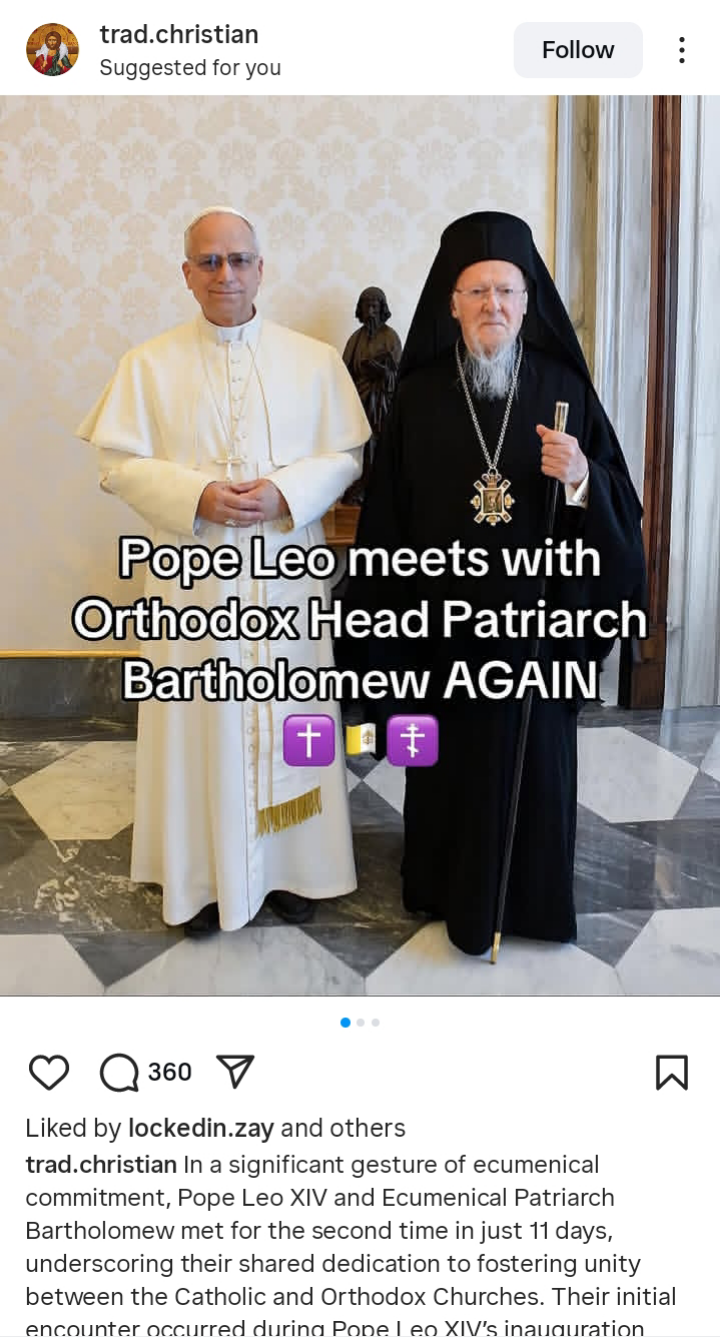
For anyone looking at a photo of a pope and a patriarch standing together today and wondering “were they ever this close before?”, the answer is yes, but usually under duress. The real test for the future will be whether any new closeness can grow without an emperor’s army waiting in the wings.
So what? The medieval history of Catholic–Orthodox relations is not just a story of a split, but a record of how hard it is to rebuild trust once faith, power, and memory have all been tangled together.
Frequently Asked Questions
Were Catholics and Orthodox still united after 1054?
Not in a stable, official way. The excommunications of 1054 marked a serious break between Rome and Constantinople, but full separation took decades to harden. In some regions, local clergy continued to cooperate and even share communion for a time. Later, there were brief formal unions at the councils of Lyon (1274) and Florence (1439), but these were short-lived and widely rejected in the Orthodox world.
What caused the Great Schism between East and West?
The Great Schism grew from long-term tensions rather than a single cause. Key factors included disputes over papal authority, the Western addition of the filioque clause to the Nicene Creed, cultural and linguistic differences between Latin West and Greek East, and political rivalries between popes and Byzantine emperors. The mutual excommunications in 1054 symbolized this breakdown, but they did not create it from scratch.
Did the Crusades make the Catholic–Orthodox split worse?
Yes. The Crusades, especially the Fourth Crusade in 1204, badly damaged relations. When crusaders sacked Constantinople and set up a Latin Empire with a Latin patriarch, many Orthodox Christians saw it as betrayal by supposed allies. The memory of 1204 made later union efforts seem suspect and fed long-lasting resentment toward the Latin West.
What were the unions of Lyon and Florence?
The Second Council of Lyon (1274) and the Council of Florence (1439) were major attempts to reunite the Catholic and Orthodox churches. At Lyon, envoys of Byzantine emperor Michael VIII accepted papal primacy and the Western creed to secure political support, but the union collapsed after his death. At Florence, most Greek bishops, under pressure and facing the Ottoman threat, signed a decree of union with Rome. That agreement faced strong opposition at home and never took firm root, especially after Constantinople fell in 1453.