Picture Eva Longoria writing a $6 million check to rescue a little action movie called John Wick, on the advice of her agent. The film explodes, Keanu Reeves is reborn as an action icon, and Longoria later calls it the best money she ever spent.
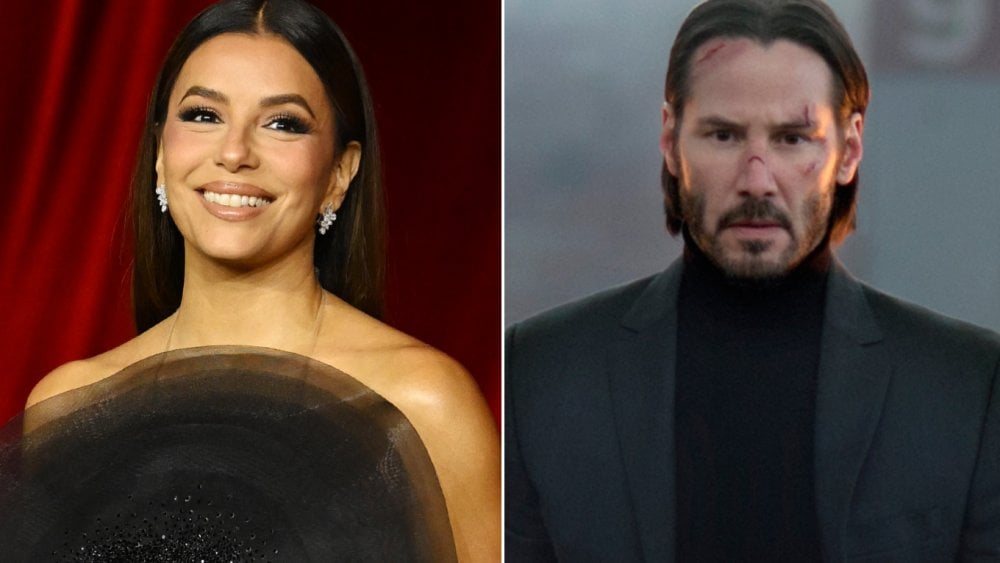
It is a great story. It is also not true.
The viral claim that Eva Longoria spent $6 million saving John Wick is a classic internet myth: a half-remembered anecdote mashed together with a famous franchise. The real story involves a different film, a different kind of risk, and a very different outcome.
They look similar because both stories feature a star putting their own money on the line for a project they believe in. But when you compare the origins, methods, outcomes, and legacy of Eva Longoria’s real investment and the actual making of John Wick, you get two very different Hollywood tales.
Where the myth came from: Eva Longoria vs the internet’s John Wick
The Reddit post that kicked this off claimed: Eva Longoria spent $6 million saving a film after her agent told her it was the right call. She now says it is the best money she ever spent. That film? John Wick.
There is no credible record of Eva Longoria financing John Wick. She is not listed as a producer, executive producer, or financier on any of the John Wick films. Trade coverage from the time, studio records, and interviews with the filmmakers do not mention her as a backer.
What does exist is a real story: Longoria once spent millions of her own money to keep a film alive after a financier pulled out. In interviews, she has talked about putting in around $6 million to save a project she believed in, on the advice of her agent, and later saying it was the best money she ever spent.
The problem is that many people remember the anecdote, but not the title. Somewhere between podcasts, tweets, and Reddit threads, the nameless film got swapped for a famous one. John Wick is a huge hit, so the internet rewrote the anecdote to attach it to a recognizable franchise.
Eva Longoria did risk millions on a film she believed in. She did not save John Wick. That confusion matters because it shows how easily real creative risk gets erased by a better-sounding lie.
Origins: Eva Longoria’s real investment vs how John Wick was born
Start with the real Eva Longoria story. She moved into producing in the 2010s, backing projects that centered Latino stories and women. She has talked about a specific film where a financier backed out late in the process. The budget hole was in the single-digit millions. Her agent told her that if she believed in the film, putting in her own money was the right move.
She did it. She became not just a producer in name, but an actual investor. That is what she later called the best money she ever spent. It was less about a giant box office win and more about owning her work and proving she could steer a project from start to finish.
John Wick had a very different origin. It began with a script by Derek Kolstad, originally titled Scorn. It was a lean revenge story about a retired hitman who goes on a killing spree after his dog is murdered. Kolstad wrote it on spec, and it made the rounds in Hollywood.
Keanu Reeves read it and saw something he could build a new action persona around. He brought in Chad Stahelski and David Leitch, his former stunt doubles from The Matrix, to direct. They had never directed a feature before, but they knew action inside out.
The film was set up at Thunder Road Pictures, with Basil Iwanyk producing. Lionsgate got involved as distributor. The budget has been reported in the $20–30 million range, modest by studio standards but not a shoestring indie.
So from the start, Longoria’s real investment story is about an actor-producer plugging a financing hole on a smaller film. John Wick is about a mid-budget studio-backed action movie built around a star and a stunt team. That difference in origin shapes everything that follows.
By separating the real Longoria story from the invented John Wick version, you can see how different kinds of risk operate in Hollywood instead of flattening them into one myth.
Methods: personal money vs studio-backed production
When Eva Longoria put millions of her own money into a film, she was using a very specific method: personal equity. She was not just accepting a pay cut or deferring a salary. She was writing a check. That meant she took on real financial risk. If the film flopped, she would not get that money back.
Actors sometimes do this on passion projects. They might mortgage a house, pull from savings, or bring in friends and family as investors. The upside is control. The downside is that the pain is personal if the film fails.
Longoria’s agent reportedly framed it as a long-term move. By stepping in when a financier walked away, she could keep the project alive, protect the jobs attached to it, and prove she could deliver as a producer. Her method was simple: bet on herself and her taste.
John Wick used a very different method. It was financed through the usual mix of production companies, pre-sales, and studio backing. Thunder Road and its partners put the package together. Lionsgate, which had a history with mid-budget action, came in as distributor.
Keanu Reeves did take a kind of risk, but it was reputational more than financial. He attached himself to a first-time directing team and a script that could easily have been dismissed as generic revenge fare. He trained for months, did many of his own stunts, and committed to a very physical performance.
The directors, Stahelski and Leitch, brought their stunt background to bear. They pushed for long takes, clear choreography, and what fans now call “gun-fu”. The method here was creative risk inside a relatively safe financial structure. The studio was not betting its future on the film, but the filmmakers were betting their careers.
Comparing the methods shows why the myth feels plausible. Both stories involve someone taking a risk on a project that could easily have been ignored. But in one case the risk is a personal bank account. In the other, it is a creative reputation inside a studio-financed system. That difference matters when you talk about who really “saves” a film.
Outcomes: best money ever vs surprise franchise hit
Eva Longoria has said that the film she saved with her own money turned out to be the best money she ever spent. She has not tied that line publicly to John Wick. Instead, she has talked about how investing in her own projects paid off in control, credibility, and future work.
Her producing career grew. She moved into directing, including the 2023 feature Flamin’ Hot. She built a reputation as someone who could get projects made, especially stories centered on communities that Hollywood often sidelines. The return on her $6 million was not just financial. It was leverage and identity in the industry.
John Wick had a very different outcome. The first film, released in 2014, opened modestly but had strong word of mouth. It earned around $86 million worldwide on that reported $20–30 million budget. Respectable, but not a Marvel number.
Where it really exploded was in home viewing. Streaming, Blu-ray, and cable turned John Wick into a cult hit. Audiences responded to the clean action, the strange assassin underworld with its gold coins and hotel rules, and Reeves’ weary, precise performance.
The outcome was a franchise. John Wick: Chapter 2 (2017), Chapter 3 – Parabellum (2019), and Chapter 4 (2023) each made more than the last, with the series crossing the billion-dollar mark in combined box office. Spin-offs followed, like the TV prequel The Continental and the film Ballerina.
So you have two different “best money” stories. Longoria’s is about a personal bet that paid off in long-term career capital. John Wick is about a mid-budget genre film that grew into an unlikely empire. Folding them into one myth erases the specific ways each success actually worked.
By keeping the outcomes separate, you can see how personal investment and studio-backed risk produce different kinds of rewards, instead of pretending one person quietly bankrolled a billion-dollar action franchise.
Legacy: why the myth stuck and what John Wick really changed
So why did the internet decide Eva Longoria saved John Wick instead of the film she actually backed?
Part of it is narrative laziness. “Actor invests in mid-budget film you have never heard of and feels good about it” is not a sticky story. “Actor secretly saves massive hit franchise” is. Social media rewards the second version. People share what sounds impressive, not what is accurate.
Another part is how we talk about creative risk. We like clean hero stories. One person writes a check. One person saves a film. The messy reality, where dozens of people make medium-sized decisions that add up to a finished movie, is harder to tweet.
There is also a gender angle. Longoria has spent years trying to get Latino and women-led projects made. Attaching her name to John Wick lets people praise her for something that fits a familiar, male-coded success story: a violent action franchise. It accidentally sidelines the work she has done on stories that do not fit that mold.
John Wick itself has a very real legacy that does not need myth. It helped revive the R-rated action film in Hollywood. It showed that clear choreography, practical stunts, and a coherent visual style could still draw audiences.
It also changed Keanu Reeves’ career. After a quieter 2000s, he became, again, a defining action star. The film turned stunt coordinators into directors and made “gun-fu” part of the genre vocabulary.
On the other side, Eva Longoria’s real legacy as a producer and director is about representation and authorship. She has pushed for Latino stories, hired diverse crews, and argued publicly that women of color are underfunded by studios and streamers.
Her $6 million decision fits that legacy. It is about an actress refusing to wait for permission and instead buying her way into the decision-making room. That is a very different kind of influence than secretly saving John Wick, and it matters in its own way.
By separating the myth from the facts, you can see two legacies clearly: John Wick as a franchise that reshaped modern action, and Eva Longoria as a creative who is building power through ownership and risk, not through a hidden check on someone else’s hit.
Why this myth matters more than it seems
At first glance, the Reddit story is harmless. Eva Longoria gets extra credit. John Wick gets another fun anecdote. No one gets hurt.
But look closer and you see what gets lost. The real film Longoria backed disappears. The actual producers and financiers of John Wick get swapped out for a more famous name. The specific struggle to fund certain kinds of stories is replaced by a neat, false crossover.
Hollywood already has a habit of erasing the messy, unglamorous work that goes into getting films made. When the internet casually rewrites who paid for what, it adds another layer of fog over an industry that is already opaque.
There is also a practical angle. People use stories like this to argue about how the business works. If you think John Wick was saved by one star’s personal check, you might imagine that is how most hits are made. In reality, mid-budget action films like John Wick usually come from a mix of producers, pre-sales, and calculated studio bets, not one secret patron.
Eva Longoria did something hard and risky when she put her own money into a film. John Wick did something different when it turned a modest budget into a global franchise. They look similar because both stories involve belief in a project that could have died. But the details are not interchangeable.
Keeping those details straight is not just about pedantry. It is about giving credit where it belongs, understanding how creative risk actually works, and resisting the urge to trade real stories for better clickbait.
Eva Longoria did not save John Wick. She did something more interesting: she saved her own film, on her own terms. John Wick saved itself the old-fashioned way, with a sharp script, a committed star, and a production team that knew exactly what kind of action movie they wanted to make.
That is less tidy than the Reddit myth, but it is a better guide to how Hollywood really runs.
Frequently Asked Questions
Did Eva Longoria really spend $6 million to save John Wick?
No. There is no evidence Eva Longoria financed John Wick. She has spoken about putting around $6 million of her own money into a different film after a financier pulled out, and calling it the best money she ever spent. Online, that real anecdote has been wrongly attached to John Wick.
Who actually financed the first John Wick movie?
The first John Wick (2014) was produced by Thunder Road Pictures with Basil Iwanyk and partners, and distributed by Lionsgate. It was a mid-budget studio-backed action film, with financing coming through production companies, pre-sales, and standard industry arrangements, not a single star’s personal check.
What was Eva Longoria’s real $6 million investment?
Eva Longoria has described putting millions of her own money into a film she was producing after a financier backed out. She has not consistently named that project in public interviews, but she has framed it as a turning point that gave her more control and credibility as a producer. It was not John Wick.
How did John Wick become such a successful franchise?
John Wick started as a modestly budgeted revenge thriller written by Derek Kolstad and led by Keanu Reeves, with first-time directors Chad Stahelski and David Leitch. Strong word of mouth, clear and stylish action, and home-viewing success turned it into a hit, which led to sequels, spin-offs, and a billion-dollar action franchise.