On the night Emma Watson turned 18, photographers lay flat on the pavement outside her London home, cameras angled up her skirt. The next day, those images ran in the press. Had they been taken 24 hours earlier, they could have been illegal child sexual images. At 18, they were sleazy but suddenly protected by press freedom and the adult porn market.
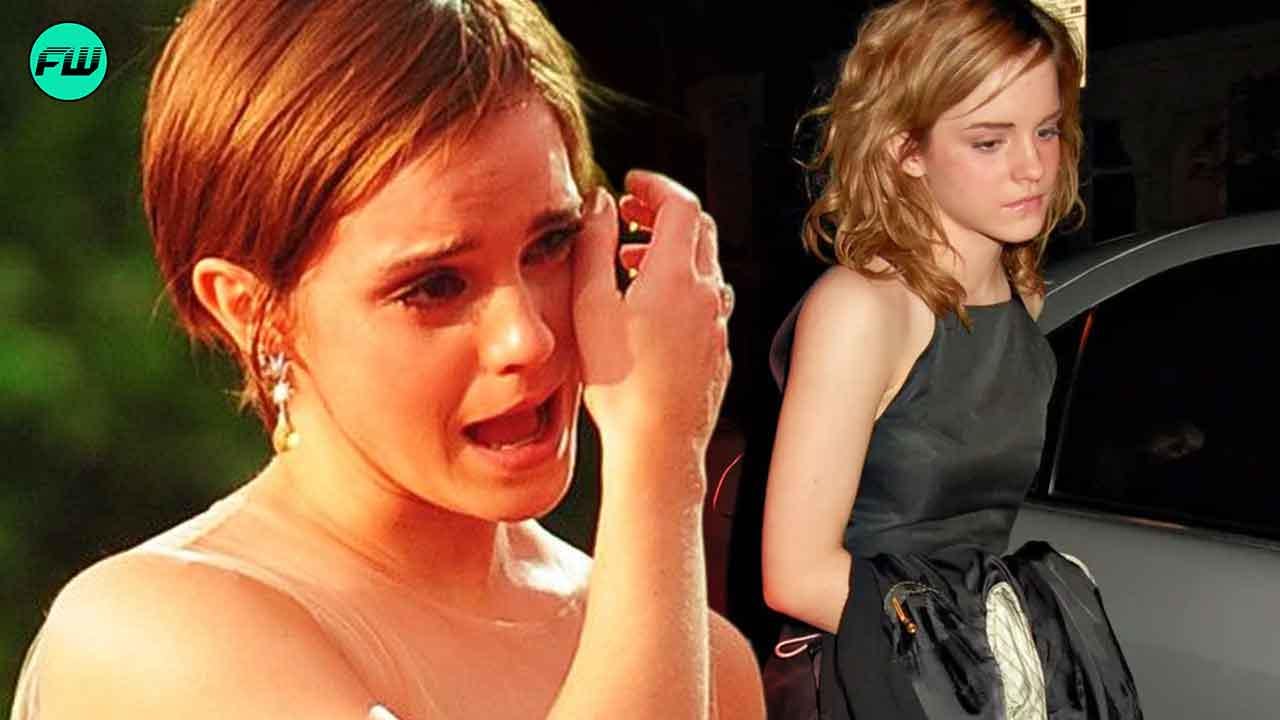
They look similar because paparazzi harassment and ordinary press photography both involve cameras, celebrities and public places. But they come from different legal traditions, use different methods, lead to different outcomes, and leave very different legacies for privacy law. By the end of this story, Emma Watson’s birthday incident becomes less of a weird fact and more of a case study in how thin the line is between protection and exploitation.
How did paparazzi culture and press freedom start out?
The word “paparazzi” comes from Federico Fellini’s 1960 film La Dolce Vita. The character Paparazzo was an annoying, hyperactive photographer chasing celebrities in Rome. The name stuck to a new kind of photographer: not the calm press photographer at a podium, but the guy hiding in a bush outside a nightclub.
By the late 20th century, paparazzi culture had hardened into a business model. In Europe and the US, tabloid papers and photo agencies paid good money for shots that felt illicit. The more invasive the image, the higher the price. The death of Princess Diana in 1997, after a car chase involving paparazzi in Paris, exposed this culture to global outrage, but did not kill it.
Traditional press photography, by contrast, grew out of political reporting and war coverage in the 19th and early 20th centuries. Think of press photographers at the front lines of World War II, or civil rights marches in the United States. Their job was to document events of public interest, not to manufacture them.
Legally, both paparazzi and ordinary press photographers sit under the same big umbrella: freedom of expression and freedom of the press. In the UK, that means Article 10 of the European Convention on Human Rights. In the US, it means the First Amendment. Neither document uses the word “paparazzi.” The law protects the act of taking and publishing images, then courts argue about where privacy begins.
Emma Watson’s 18th birthday incident grew out of that paparazzi tradition, not the older tradition of public-interest photography. It was about selling an image of a young woman’s body, not informing the public about anything that mattered. So what?
Why did Emma Watson’s 18th birthday matter legally?
Emma Watson was born on April 15, 1990. She became globally famous as Hermione Granger in the Harry Potter films, starting at age 11. By the time she turned 18 in 2008, she had spent nearly half her life in front of cameras. That birthday flipped a legal switch.
In the UK, sexual images of anyone under 18 can be treated as indecent images of a child. That is a serious criminal offense. The Protection of Children Act 1978 and later laws mean that publishing upskirt photos of a 17-year-old could be prosecuted as child pornography, regardless of celebrity status.
At 18, the law changes. You are still protected by general privacy and harassment laws, but the automatic child protection shield disappears. Sexualized images of you can be sold as adult content. The same photo, taken one day earlier, could be a crime. Taken one day later, it is sleazy but arguable under “freedom of expression.”
That is what made the Watson incident so disturbing to many observers. Paparazzi reportedly waited for the clock to run out on her childhood, then lay on the pavement in front of her house to get upskirt shots they knew would be legal to sell. They were not documenting a news event. They were timing the market.
In the US, the age threshold is similar for child sexual abuse material. Federal law treats sexual images of anyone under 18 as child pornography. Yet US law is generally more protective of photographers in public spaces, and less willing to recognize privacy rights for public figures. A similar incident in Los Angeles would have raised the same moral outrage, but might have been even harder to challenge in court.
Emma Watson’s birthday became a real-world example of how child protection law is a cliff, not a slope. One day you are a child whose sexualized images are illegal. The next day you are an adult whose body is a commodity. So what?
How do paparazzi methods differ from ordinary press photography?
On paper, both paparazzi and regular press photographers use cameras in public. In practice, their methods diverge sharply.
Paparazzi work on speculation. They wait outside homes, hotels and restaurants. They follow cars. They tip off each other about flight arrivals. They use long lenses to shoot over walls and hedges. In Watson’s case, they lay on the pavement to get an angle that no ordinary bystander would choose, because the goal was not a face or an outfit, but an intimate area that the subject clearly did not want photographed.
Ordinary press photographers usually work at events where attendance is expected: press conferences, red carpets, political rallies, sports matches. They may shout questions or jostle for position, but the subject knows cameras are present and the event exists to be seen. The photographer is documenting something arranged or accepted by the participants.
Privacy law in both the UK and US often turns on this distinction: expectation. If you walk a red carpet, you expect to be photographed. If you walk from your front door to a waiting car, you might expect some photos, but not someone lying on the ground trying to see up your clothes.
In the UK, the law has slowly started to recognize that difference. The Protection from Harassment Act 1997 can be used against repeated stalking by photographers. The tort of misuse of private information, shaped by cases like Naomi Campbell v MGN (2004) and later celebrity cases, gives people a way to sue when images intrude on private life with no public interest justification.
In the US, there is more protection for newsgathering and less for privacy, but even there, states like California have passed specific anti-paparazzi laws. California’s Civil Code section 1708.8 targets photographers who physically invade privacy or use long lenses to capture images on private property.
The Watson incident sits at the messy edge of these rules. The photographers were on a public street, which is usually safe ground. Yet their method, lying on the pavement to get upskirt shots of a young woman leaving her home, looks far more like harassment than journalism. So what?
What are the outcomes: legal cases, public backlash and industry change?
Emma Watson did not just shrug and move on. Over the years, she has spoken publicly about being sexualized by the media as a teenager and young adult. She has also used lawyers to push back against intrusive images. In 2014, when a fake nude photo of her began circulating online after a speech on gender equality, her team moved quickly to threaten legal action.
Her 18th birthday incident did not become a famous court case. There was no single headline judgment that rewrote the law. Instead, it fed into a growing discomfort with how the press treated young women who grew up on screen. Watson, Miley Cyrus, Britney Spears and others became case studies in how the media turned child stars into sexual objects the moment the law allowed it.
In the UK, a series of privacy and phone hacking scandals pushed the government to set up the Leveson Inquiry in 2011. That inquiry exposed how tabloids had hacked voicemails and harassed celebrities and crime victims. It did not focus on Watson’s case, but the culture that produced those upskirt photos was the same culture Leveson examined.
One outcome was a tougher line in some courts. Celebrities like Hugh Grant, Sienna Miller and others won settlements against newspapers and photo agencies. The idea that “if you are famous, you have no privacy” started to erode in British law. Judges began to say, more clearly, that even public figures have a private life, especially at home or in vulnerable situations.
In the US, change has been more piecemeal. California’s anti-paparazzi laws were strengthened after complaints from celebrities with young children. Some outlets, like People magazine, adopted policies not to publish unauthorized photos of celebrities’ kids. That was less about law and more about public relations, but it showed that audience disgust could shift industry behavior.
Watson’s case did not create these changes, but it became part of the mental file people draw on when they think about media abuse. It helped move the conversation from “that is the price of fame” to “why are we timing sexual exploitation to the 18th birthday?” So what?
How do the UK and US compare on celebrity privacy today?
On the surface, the Emma Watson story sounds like something that could happen in either country. Paparazzi, a young star, a birthday, a line crossed. Underneath, the legal frameworks are different.
In the UK, there is no written constitution, but there is a growing body of privacy law. Article 8 of the European Convention on Human Rights protects the right to respect for private and family life. Courts balance that against Article 10, freedom of expression. This has led to a string of cases where celebrities, athletes and even ordinary people have won injunctions against publication of intimate images or private information.
In the US, the First Amendment gives very strong protection to speech and press. There are privacy torts, like intrusion upon seclusion and publication of private facts, but public figures have a harder time winning. The Supreme Court has repeatedly favored broad press freedom, especially when the subject is newsworthy.
Child protection laws are similar in one narrow sense. Both systems treat sexual images of minors as criminal child sexual abuse material. That is why the “24 hours earlier” detail in the Watson story is so stark. On one side of that line, the law is severe and clear. On the other side, everything becomes a balancing act between privacy and press freedom.
In practice, this means that a UK celebrity like Watson has a somewhat better chance of using the courts to push back against invasive photography, especially around the home or in obviously humiliating situations. A US celebrity has more protection against physical harassment in some states, but less chance of stopping publication of images taken in public.
The Watson incident shows how similar the culture can look, even when the law is different. Paparazzi in both countries exploit the same market: public appetite for intimate celebrity images. The legal systems then try, often awkwardly, to draw lines after the fact. So what?
What legacy did Emma Watson’s case leave for privacy and celebrity?
Emma Watson’s 18th birthday did not create a new law. It did something subtler. It gave people a concrete, disturbing example of how arbitrary the legal age line can be when it collides with sexualization and profit.
The story is now passed around online as a “today I learned” fact because it captures several tensions at once. The law that protects children from sexual exploitation is clear and severe. The moment someone turns 18, that protection vanishes, even if the power dynamics and vulnerability look very similar. Paparazzi know this and time their behavior accordingly.
Watson’s career since then has made the contrast sharper. She went to Brown University, became a UN Women Goodwill Ambassador, and used her platform to talk about gender, consent and media treatment of women. The girl whose skirt was photographed on her 18th birthday became a woman arguing for a different standard of respect.
Her case also feeds into current debates about online harassment and non-consensual images. Upskirting, once treated as a joke or a tabloid sport, is now a specific criminal offense in several jurisdictions. In England and Wales, it was criminalized in 2019 under the Voyeurism (Offences) Act. That came too late for Watson’s birthday, but not too late for the girls and women who saw her story and thought, “that could be me.”
The comparison between paparazzi culture and ordinary press photography, between UK and US law, and between child protection and adult exploitation, shows why this one birthday incident still circulates. It is not just about Emma Watson. It is about how we draw lines around bodies, cameras and profit, and how often those lines are drawn for the convenience of the people holding the cameras.
Frequently Asked Questions
What exactly happened to Emma Watson on her 18th birthday?
On her 18th birthday in April 2008, paparazzi reportedly lay down on the pavement outside Emma Watson’s home to take upskirt photos as she left. Those images were then published. Had similar sexualized photos been taken and published while she was still 17, they could have been treated as illegal child sexual images under UK law. At 18, the images were legal to sell, though widely seen as exploitative.
Why would the Emma Watson photos have been illegal 24 hours earlier?
UK and US laws treat sexual images of anyone under 18 as child sexual abuse material, regardless of fame. In the UK, the Protection of Children Act 1978 and later laws criminalize making and distributing indecent images of children. If paparazzi had taken and published sexualized upskirt photos of Watson while she was 17, they could have faced serious criminal charges. Once she turned 18, those same images fell under adult pornography and press freedom rules instead.
Are paparazzi photos illegal in the UK or US?
Most paparazzi photos are not automatically illegal in either country. Taking pictures in public is generally lawful, and both the UK and US protect freedom of expression and press. However, there are limits. In the UK, harassment laws and the tort of misuse of private information can be used against intrusive or repeated photography, especially around the home or in humiliating situations. In the US, some states like California have specific anti-paparazzi laws targeting physical harassment and long-lens intrusions onto private property. Sexual images of minors are illegal in both systems.
How do UK and US laws differ on celebrity privacy?
The UK has developed stronger privacy protections for celebrities through case law, balancing the right to privacy (Article 8 of the European Convention on Human Rights) against freedom of expression (Article 10). Courts sometimes block or penalize publication of intrusive images with no public interest. In the US, the First Amendment gives broader protection to the press, and public figures have a harder time winning privacy cases. Both systems criminalize child sexual abuse material, but adults, including celebrities, have more limited control over images taken in public, especially in the US.