Hundreds of brides in white sprint down a Los Angeles street. Behind them, a stone-faced man in a suit runs for his life as rocks, then boulders, start tumbling down a hill after him. This is not a nightmare. It is the climax of Buster Keaton’s 1925 film Seven Chances, shot on real Hollywood streets with real stunt work and almost no trick photography.
Seven Chances is a silent romantic comedy about a shy man who must marry by 7 p.m. to inherit a fortune. It is also one of the purest examples of how early Hollywood turned physical danger into laughter. By the time the credits rolled, Keaton had invented one of cinema’s most famous chase sequences and pushed stunt comedy to new extremes.
By the end of this explainer, you will know what Seven Chances actually is, why it was made, how that wild boulder-and-bride chase came to be, who drove the production, and why a 1925 film shot in Hollywood still matters to how movies are made today.
What was “Seven Chances”? A clean definition
Seven Chances is a 1925 silent feature film directed by and starring Buster Keaton. It is a romantic farce built around a simple premise: a man will inherit seven million dollars if he marries by 7 p.m. on his twenty-seventh birthday. The catch is that he learns this with only hours to spare.
Keaton plays James “Jimmie” Shannon, a mild, awkward partner in a failing brokerage firm. When his lawyer reveals the inheritance terms, Jimmie scrambles to find a bride. He first bungles a proposal to the woman he actually loves, then, in desperation, tries to marry anyone who will have him. A newspaper announcement turns his private panic into a public stampede as hundreds of would-be brides descend on him.
The film is based on a 1916 stage play, also called Seven Chances, by Roi Cooper Megrue. The play was a Broadway hit, and its basic gimmick was already well known: a man, a deadline, and a lot of women. Keaton and his writers took that premise and stripped it down, then rebuilt it around visual gags and escalating physical danger.
In plot terms, Seven Chances is a straightforward romantic comedy. In film history terms, it is a key example of 1920s Hollywood stunt comedy, where real bodies, real streets, and real gravity did the work that CGI would do today. It is also one of the clearest windows into how Keaton thought about storytelling: start with a simple rule, then push it until the world falls apart.
So what? Defining Seven Chances as both a stage adaptation and a stunt-driven film shows how Keaton turned a talky Broadway premise into a purely visual Hollywood spectacle, which is why people are still watching clips from it a century later.
What set it off? Why this story, in 1925 Hollywood?
By 1925, Buster Keaton was not the new kid in Hollywood. He had already made successful shorts and features like Our Hospitality (1923) and Sherlock Jr. (1924). He had his own production unit at Metro-Goldwyn-Mayer’s predecessor, and he was trusted to deliver one feature film a year.
The pressure was simple: keep the hits coming. Silent comedy was a crowded field. Charlie Chaplin, Harold Lloyd, and others were competing for audiences. Keaton needed premises that were clear, filmable, and flexible enough to support his style of physical comedy.
Enter Joseph M. Schenck, Keaton’s producer and brother-in-law. Schenck bought the screen rights to Megrue’s play Seven Chances and essentially handed it to Keaton as his next assignment. Keaton later said he did not particularly like the play. It was dialogue-heavy and dependent on verbal wit, which is the opposite of what silent film does best.
Still, the premise had something Keaton could use: a ticking clock and a simple goal. Marry by 7 p.m. or lose seven million dollars. That kind of deadline is gold for visual comedy. It gives you a reason for frantic movement, bad decisions, and escalating chaos.
Hollywood in 1925 was also shifting from short comedies to feature-length stories. That meant comedians had to find ways to stretch gags over 60 minutes without losing momentum. Adapting a known stage property was one way to reassure investors and exhibitors that the story could sustain a full evening’s entertainment.
So what? The choice to adapt Seven Chances came from industrial pressure and producer decisions, and that tension between “safe” material and Keaton’s restless inventiveness is exactly what produced the film’s most memorable sequences.
The turning point: from mild farce to all-out chase
If you watch Seven Chances today, the first half feels almost like a different movie from the second. The opening reels are gentle and character-based. Jimmie is too shy to propose to his sweetheart, Mary Jones, played by Ruth Dwyer. Their misunderstandings are small and painful, not spectacular.
The turning point comes when Jimmie’s business partner, desperate to save their firm, runs a newspaper ad offering marriage to any woman willing to wed Jimmie before 7 p.m. The ad includes the promise of seven million dollars. The film cuts to women across Los Angeles reading the paper and reacting. Then they start arriving.
Keaton turns a quiet premise into a mass event. A church fills with brides. Jimmie, horrified, tries to escape. The brides, furious at being jilted, chase him out into the streets. What began as a private inheritance problem becomes a public riot.
Then Keaton does something even bolder. As Jimmie flees into the countryside, he disturbs a small rock on a hillside. That rock dislodges another. Then another. Soon he is being chased not only by an army of brides but by a growing avalanche of rocks and boulders.
This sequence was not in the original play. It was a pure Keaton invention. According to later accounts, the idea evolved during shooting. The crew experimented with rolling a few rocks, saw how good it looked on camera, and kept scaling it up. By the final version, Jimmie is dodging massive fake boulders that really are tumbling down real hills at real speed.
The film’s tone shifts from drawing-room comedy to surreal disaster movie. The stakes are no longer just “Will he marry?” but “Will he survive?” The chase through Hollywood and the surrounding hills turns the city itself into a character, a kind of obstacle course for one small, determined man.
So what? That turning point, from stage-style farce to cinematic chase, is where Keaton takes control of the material, and it is why the film is remembered: he uses the camera, the city, and physics to do what theater never could.
Who drove it? Buster Keaton, his team, and the city of Hollywood
Buster Keaton was the director, star, and main creative force behind Seven Chances. He grew up in vaudeville, where his parents literally threw him around the stage as part of the act. That background made him comfortable with physical risk and precise timing. It also taught him to build gags that read clearly from the back row, which translated well to the movie screen.
On Seven Chances, Keaton worked with his usual writing and gag team, including Clyde Bruckman and Jean Havez. They took Megrue’s script and stripped out most of the dialogue-based humor, replacing it with visual setups. The famous montage of women reacting to the newspaper ad, for example, is pure cinema: no intertitles, just faces and actions.
Joseph M. Schenck, as producer, provided the money and the pressure. He wanted a bankable feature. Keaton wanted freedom to experiment. Their tug-of-war shaped the film. Schenck’s insistence on using the play gave Keaton a starting point. Keaton’s refusal to stay within the play’s limits gave the film its lasting power.
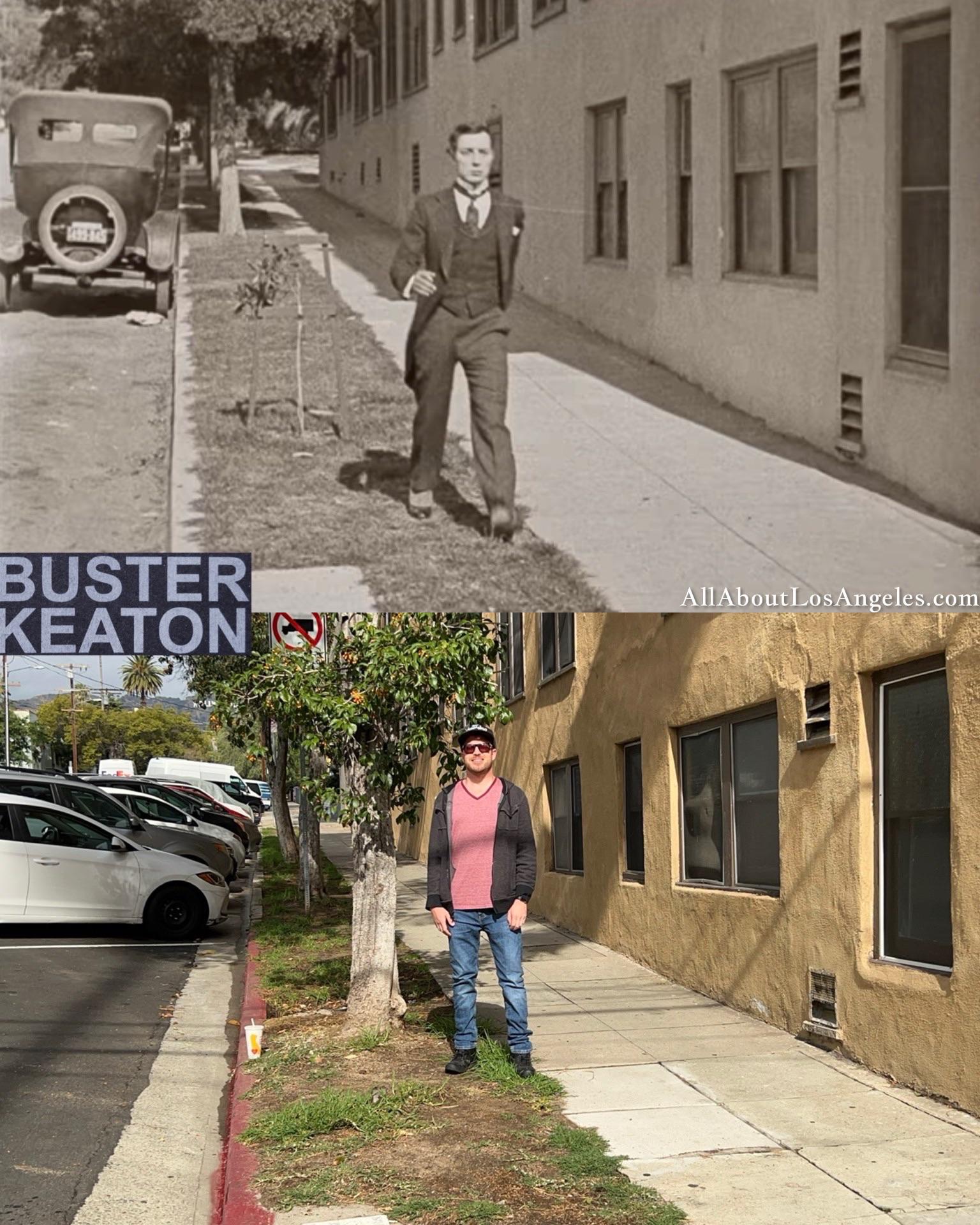
The city of Hollywood and Los Angeles also “played” a role. Many of the outdoor scenes were shot on actual streets and hills around Hollywood in 1924–1925. Viewers today can spot early 20th-century Los Angeles architecture, dirt roads, and open hillsides that would later be covered by development. The famous boulder chase uses real terrain, not studio backlots.
Keaton’s stunt team and crew made that possible. They built lightweight but convincing fake boulders out of materials like papier-mâché and chicken wire, then rolled them down slopes with Keaton running in front of them. The danger was real enough that misjudging distance or speed could have meant serious injury.
So what? Knowing who drove Seven Chances reveals that it was not just a Buster Keaton vehicle but a collaboration between a risk-taking performer, a cautious producer, a skilled crew, and a very real city that gave the film its texture and danger.
What did it change? Consequences for comedy and stunts
Seven Chances did not become Keaton’s most famous film. That honor usually goes to The General (1926) or Sherlock Jr. But it had several quiet consequences for how Hollywood thought about comedy and action.
First, it helped cement the idea that a feature-length comedy could be built around one extended set piece. The entire last third of the film is essentially one long chase. That structure, a slow build to an outrageous finale, would become standard in later comedies and action films.
Second, the boulder sequence pushed stunt work into a new register. Keaton had already done dangerous things, like hanging off moving trains. In Seven Chances, the danger is multiplied and sustained. He is not dodging one object but dozens, over and over, in wide shots that make it hard to fake. It showed other filmmakers that you could create large-scale physical spectacle without war or disaster as the subject.
Third, the film helped normalize location shooting for comedies. Instead of keeping the action on studio sets, Keaton took his cameras into the streets and hills. That choice made the chaos feel more real and tied the comedy to a specific place and time: Hollywood in the mid-1920s, still half-urban, half-rural.
Commercially, the film did respectable business, though it was not a runaway hit. Keaton himself was reportedly dissatisfied with parts of it, especially the early reels that stuck closer to the play. But audiences remembered the chase. Over time, that sequence became a reference point for later filmmakers staging large-scale comic disasters.
So what? Seven Chances helped shift silent comedy toward bigger, riskier, more cinematic set pieces, and it showed that the geography of a real city could be turned into a playground for both laughs and danger.
Why “Seven Chances” still matters in the age of CGI
Clips from Seven Chances, especially the boulder and bride chases, circulate online today because they feel strangely modern. The premise could be a contemporary rom-com: a man facing a ridiculous deadline, a viral ad gone wrong, a mob of strangers chasing him through the city.
What makes it feel different is the physical reality. There are no digital effects. Keaton is actually running, actually falling, actually dodging objects that could hurt him. For viewers used to green screens and computer-generated chaos, that reality gives the gags a different kind of tension.
The film also matters as a record of Hollywood itself. When you see Keaton sprinting down those streets in 1925, you are looking at a young film industry’s home territory before it was fully built up. The Reddit post that sparked interest in this film, showing a scene from Seven Chances in Hollywood, taps into that double curiosity: how did they do those stunts, and what did Hollywood look like when they did?
For film historians and fans, Seven Chances is a case study in adaptation. It shows how a stage play dependent on dialogue can be turned into a largely wordless film driven by images and movement. It also captures Keaton at a midpoint in his career, before studio control at MGM would start to limit his freedom.
Most of all, it matters because it reminds us that comedy has always flirted with danger. The laughter in Seven Chances is built on real risk, carefully calculated but never entirely safe. That edge is part of why, a century later, a stone-faced man running from brides and boulders in Hollywood still feels worth watching.
So what? Seven Chances endures not just as an old silent film but as a living example of how early Hollywood mixed risk, romance, and real streets to create a kind of comedy that modern filmmakers are still chasing.
Frequently Asked Questions
What is Buster Keaton’s film Seven Chances about?
Seven Chances is a 1925 silent romantic comedy in which Buster Keaton plays Jimmie Shannon, a man who must marry by 7 p.m. on his twenty-seventh birthday to inherit seven million dollars. After bungling a proposal to the woman he loves, he becomes the target of hundreds of would-be brides and ends up in a wild chase through Hollywood and the surrounding hills.
Did Buster Keaton really do the boulder stunt in Seven Chances?
Yes. The boulder chase in Seven Chances used large, lightweight fake boulders, but they were rolled down real hills while Keaton ran in front of them. The sequence was staged and rehearsed, yet the physical risk was genuine, which is why the scene still feels tense and impressive today.
Was Seven Chances based on a play?
Seven Chances was adapted from a 1916 stage play of the same name by Roi Cooper Megrue. The original play relied heavily on dialogue and verbal wit. Keaton and his team kept the basic premise of a man who must marry by a deadline to inherit money, then rebuilt the story around visual gags and large-scale chase scenes.
Where was Seven Chances filmed?
Seven Chances was shot in and around Hollywood and Los Angeles in 1924–1925. Many outdoor scenes, including parts of the famous chase, use real city streets and nearby hills rather than studio backlots. That location shooting gives the film a documentary glimpse of early Hollywood’s streets and open spaces.