She looks straight into the camera, cap tilted, collar turned up, eyes older than her 17 years. The Reddit photo of Albina Mali‑Hočevar from 1942 feels like a movie still. It is not. It is a picture of a teenager who had already been wounded in battle, who had already chosen to fight and possibly die rather than live under fascist rule.
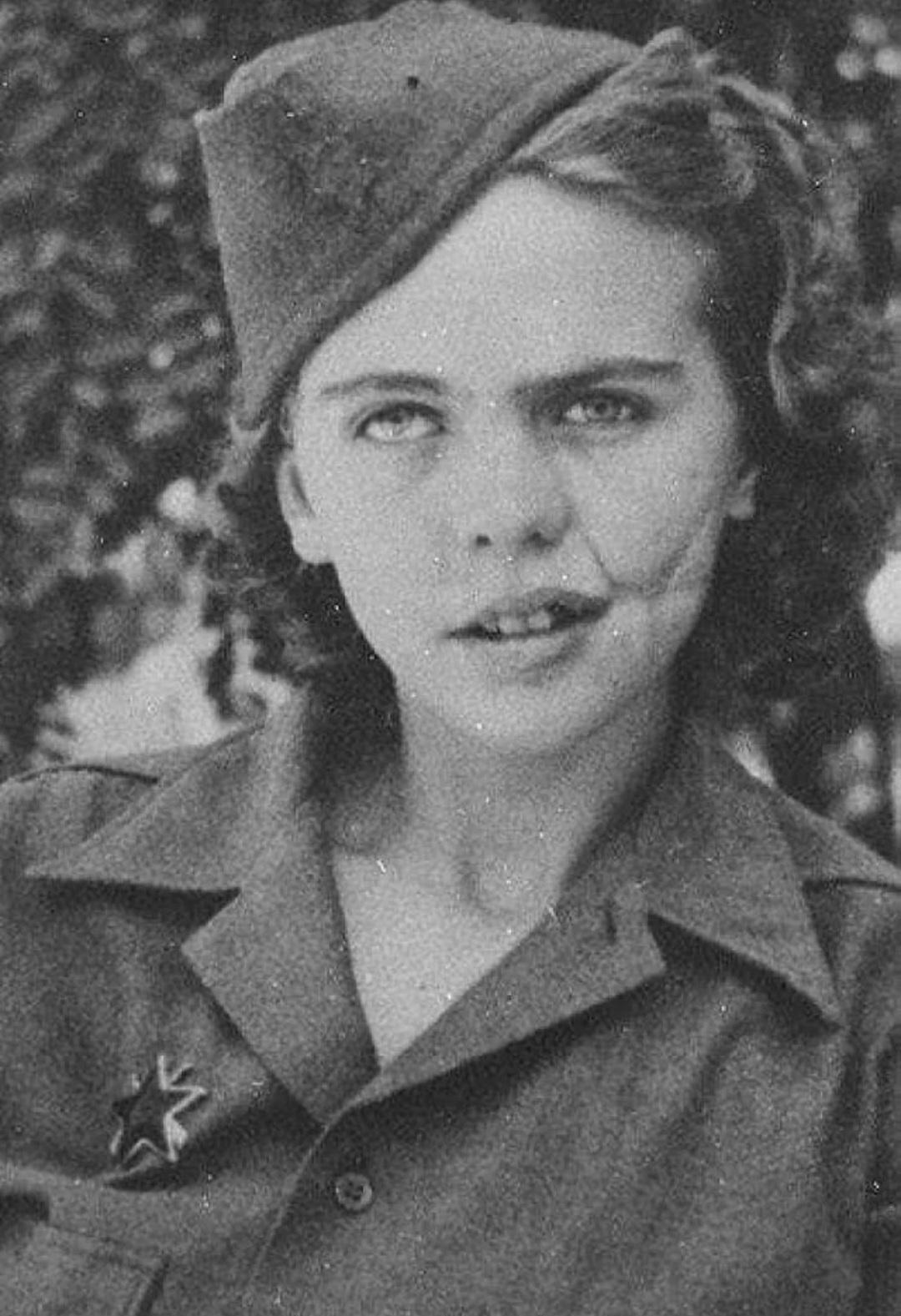
Albina was a Slovene anti‑fascist partisan in occupied Yugoslavia during the Second World War. At an age when most teenagers worry about exams or first jobs, she was carrying weapons, running messages, and dodging German and Italian patrols in the forests and mountains of what is now Slovenia.
Understanding who she was means understanding what the Yugoslav Partisans were, why so many young people joined them, and how this messy, brutal resistance war helped shape postwar Europe.
What was the Yugoslav partisan movement, and who was Albina?
The Yugoslav Partisans were a communist-led resistance movement that fought against Axis occupation in Yugoslavia from 1941 to 1945. They waged a guerrilla war against German, Italian, Hungarian, Bulgarian forces and local collaborators, while also competing with royalist Chetniks for control of the resistance.
Albina Mali‑Hočevar was one of the youngest and most visible members of this movement. Born in 1925 in what was then the Kingdom of Serbs, Croats and Slovenes, she grew up in a region that would be carved up by Axis powers after the German invasion of Yugoslavia in April 1941.
By 1941–42, she had joined the Slovene Partisans. Sources differ on the exact month, but she was still in her mid‑teens. She started as a courier, carrying messages, food, and sometimes ammunition between partisan units and sympathizers in occupied villages. Couriers were often young and female, partly because occupiers were less likely to suspect them at first.
Albina was wounded multiple times during the war. Later Yugoslav accounts describe her being hit in the leg and chest in separate incidents, surviving both, and returning to duty. She became a kind of symbol in partisan propaganda: the brave, young, ordinary girl who chose resistance.
In plain terms, Albina Mali‑Hočevar was a teenage girl from Slovenia who joined the communist-led Yugoslav Partisans, fought as a courier and fighter against fascist occupiers, was wounded several times, and survived the war. Her story shows that the partisan movement was not just hardened male soldiers in the mountains, but also very young civilians drawn into a total war.
That matters because it reminds us that resistance in World War II was not an abstract cause but a set of personal, often terrifying choices made by people who were barely adults.
What set it off: Why did teenagers like Albina join the resistance?
To understand why a 17‑year‑old would pick up a gun, you have to look at what happened to Yugoslavia in 1941.
In April 1941, Nazi Germany and its allies invaded and dismembered Yugoslavia in a matter of days. The country was carved into occupation zones and puppet states. Slovenia, where Albina lived, was split between Germany, Italy, and Hungary. Each occupier brought its own mix of repression, deportations, forced labor, and attempts to erase local identity.
In the German zone of Slovenia, authorities expelled tens of thousands of Slovenes to make room for ethnic Germans. In the Italian zone, there were mass arrests, internment camps, and efforts to suppress Slovene language and culture. Across Yugoslavia, Jews, Roma, and political opponents were targeted for persecution and murder.
The Communist Party of Yugoslavia, led by Josip Broz Tito, saw the occupation as both a national catastrophe and an opportunity. In July 1941, they called for armed uprising. The Partisans framed their struggle as both a national liberation war and a social revolution.
For young people like Albina, the pull came from several directions:
There was anger at occupation and repression. Families were deported, neighbors arrested, villages burned in reprisals. Joining the Partisans could feel like the only way to hit back.
There was peer pressure and local networks. Resistance often spread through schools, youth groups, and villages. If your friends or older siblings joined, you were more likely to follow.
There was ideology and hope. Communist and left‑wing ideas had roots in prewar Yugoslavia. The Partisans promised not just to throw out the occupiers but to build a more equal society afterward.
And there was the simple fact that war erased the normal boundaries of age. Teenagers were old enough to carry messages, hide weapons, or guide fighters through forests they knew well.
Albina’s choice was extreme by peacetime standards, but in the context of mass occupation, deportation, and violence, it was part of a wider youth surge into resistance movements across Europe.
That matters because it shows that the photo of a 17‑year‑old partisan is not a curiosity. It is a window into how total war pulled children and teenagers into adult decisions about life, death, and politics.
The turning point: From scattered bands to a real army
When Albina joined, the Partisans were still a fragile guerrilla movement. They faced not only the Axis forces but also rival Yugoslav resistance groups, especially the royalist Chetniks, who were often more focused on preserving the old order than fighting occupiers at all costs.
In 1941 and early 1942, partisan units were small, poorly armed, and constantly on the move. Teen couriers like Albina were vital. Radios were rare, roads were dangerous, and written messages could get you killed if discovered. Young people could slip through checkpoints more easily, at least at first.
Several key shifts turned this scattered resistance into a major military force:
First, the occupiers’ brutality backfired. German and Italian forces carried out harsh reprisals for partisan attacks, including village burnings and mass executions. These actions pushed more civilians into the arms of the Partisans, who presented themselves as protectors.
Second, the Partisans built parallel institutions. They set up “liberated territories” in remote areas, with their own schools, courts, and local councils. This made the movement feel less like banditry and more like a future government.
Third, international recognition shifted. At first, the British and other Allies backed the Chetniks as the legitimate royalist resistance. But by 1943, reports of Chetnik collaboration with Axis forces and the growing strength of the Partisans led the Allies to switch support to Tito’s forces.
By late 1943 and 1944, the Partisans had grown into a real army, the National Liberation Army of Yugoslavia, with hundreds of thousands of fighters. Women and teenagers were still present, but the movement was no longer just a romantic guerrilla band. It was a proto‑state.
Albina’s personal turning points were physical as well as political. Each time she was wounded and returned to duty, she embodied the narrative the Partisans wanted to project: resilience, sacrifice, and youth committed to the cause.
That matters because it explains why a single teenage fighter could become so iconic. Her story lined up perfectly with the movement’s shift from marginal rebellion to recognized national army fighting for Yugoslavia’s future.
Who drove it: Albina, Tito, and the women of the Partisans
The Yugoslav resistance was not a one‑woman story. Albina was part of a much larger cast, from top leaders to anonymous villagers.
At the top was Josip Broz Tito, the communist leader who became the face of the Partisans. Under him were commanders like Koča Popović, Peko Dapčević, and many others who organized campaigns across Bosnia, Croatia, Slovenia, and Serbia.
But one of the most striking features of the movement was the scale of women’s participation. Historians estimate that roughly 100,000 women served in the Partisan forces in various roles by the end of the war. Some fought with rifles. Many more worked as nurses, couriers, cooks, and political organizers.
Albina was part of this wave. Her youth and gender made her a powerful symbol in wartime propaganda posters, photos, and later memoirs. The message was clear: if even teenage girls were fighting, the cause must be just and urgent.
After the war, the new socialist Yugoslavia built a whole culture around “narodni heroji” or People’s Heroes. These were individuals, often young, who were celebrated for bravery against the occupiers. Albina became one of these decorated figures. She received high state honors and her story was told in schools and youth organizations.
There is a catch. Postwar Yugoslav propaganda polished these stories. It emphasized courage and unity, and it downplayed fear, doubt, and the messy parts of civil war. So while Albina’s bravery is well documented, the exact details of every mission or wound are harder to separate from later mythmaking.
That matters because it reminds us to read the famous photo with two lenses at once. Albina was a real teenager who risked her life. She was also turned into a symbol by a state that needed heroic stories to legitimize its rule.
What it changed: From resistance fighter to socialist citizen
The Yugoslav Partisans did more than harass German patrols. By surviving and growing, they shaped the political map of postwar Europe.
When Germany retreated in 1944–45, it was largely Tito’s Partisans, not the exiled royal government, who controlled most of Yugoslav territory. That gave them enormous leverage in deciding what came next.
In 1945, Yugoslavia became a socialist federal republic under Tito, aligned with the Soviet Union at first but later famously independent after the Tito–Stalin split in 1948. The wartime legitimacy of the Partisans, including figures like Albina, helped Tito resist both royalist restoration and direct Soviet control.
For women, the war opened doors, even if not as wide as propaganda claimed. The new Yugoslav state granted formal equality, expanded education, and encouraged women to work outside the home. The image of the armed partisan woman was used to promote this new social order.
Albina’s own postwar life followed this pattern. She stayed in Yugoslavia, worked and lived as a respected veteran, and remained part of the official memory of the war. She died in 2014, in independent Slovenia, having lived through monarchy, fascist occupation, socialism, and post‑socialist transition.
The partisan victory also had a darker side. The end of the war in Yugoslavia involved reprisals, executions of collaborators, and suppression of political opponents. The same movement that had fought for liberation also built a one‑party state that tolerated little dissent.
That matters because Albina’s story is tied to both liberation and the creation of a new regime. Her courage helped defeat fascism, but the political order that followed was not a liberal democracy. The photo on Reddit captures a moment before those trade‑offs were clear.
Why it still matters: Memory, myth, and teenage faces of war
So why does a 1942 photo of a 17‑year‑old partisan still grab attention on Reddit in the 21st century?
First, it cuts through abstraction. World War II is often taught in terms of generals, borders, and conferences. A teenager in a cap, looking straight at the lens, makes the war personal again. It reminds us that the fight against fascism was carried by people who looked like our classmates or younger siblings.
Second, it challenges a lazy picture of resistance as something done only by older men. Across occupied Europe, teenagers and women were central to underground networks. Albina’s story is one example among many, from French résistantes to Polish scouts in the Warsaw Uprising.
Third, it raises questions about how we remember resistance. In former Yugoslav countries today, memories of the Partisans are contested. Some still honor them as liberators. Others focus on postwar repression or nationalist narratives that downplay the communist‑led struggle. A single photo can be claimed by different political camps or stripped of context entirely.
And finally, the image speaks to a recurring pattern. In wars from Syria to Ukraine, teenagers again find themselves on front lines or in resistance roles. Albina’s life is not just a relic. It is a reminder that when societies collapse into occupation and civil war, the line between child and adult blurs very fast.
That matters because the fascination with Albina Mali‑Hočevar is not just nostalgia. It is a quiet recognition that the question she faced at 17, whether to risk everything against a brutal regime, is not as distant from our own century as we might like to think.
Frequently Asked Questions
Who was Albina Mali-Hočevar in World War II?
Albina Mali‑Hočevar was a Slovene teenager who joined the communist-led Yugoslav Partisans during World War II. At around 16–17 years old she worked as a courier and fighter against German and Italian occupation forces, was wounded several times, and later became a decorated war veteran in socialist Yugoslavia.
How old was Albina Mali-Hočevar in the famous 1942 photo?
In the widely shared 1942 photo, Albina Mali‑Hočevar is about 17 years old. She had already joined the Slovene Partisans by then and was active as a courier and resistance fighter against fascist occupation in Yugoslavia.
What were the Yugoslav Partisans?
The Yugoslav Partisans were a communist-led resistance movement that fought Axis occupation in Yugoslavia from 1941 to 1945. Led by Josip Broz Tito, they waged guerrilla war against German, Italian, and other forces, grew into a large army, and eventually took power, creating socialist Yugoslavia after the war.
Did many women and teenagers fight with the Yugoslav Partisans?
Yes. Historians estimate that around 100,000 women served with the Partisans in various roles, from fighters to nurses and couriers. Many were very young, including teenagers like Albina Mali‑Hočevar, because total war and occupation pulled entire communities, not just adult men, into the resistance.