He is leaning in, maybe cracking a joke, maybe just breathing with her. She is in a white dress, veil pinned high, eyes a little wide. In a few seconds they will start down the aisle. The Reddit caption is simple: “My dad helping to calm my nerves before walking down the aisle, and the after. 1979.”
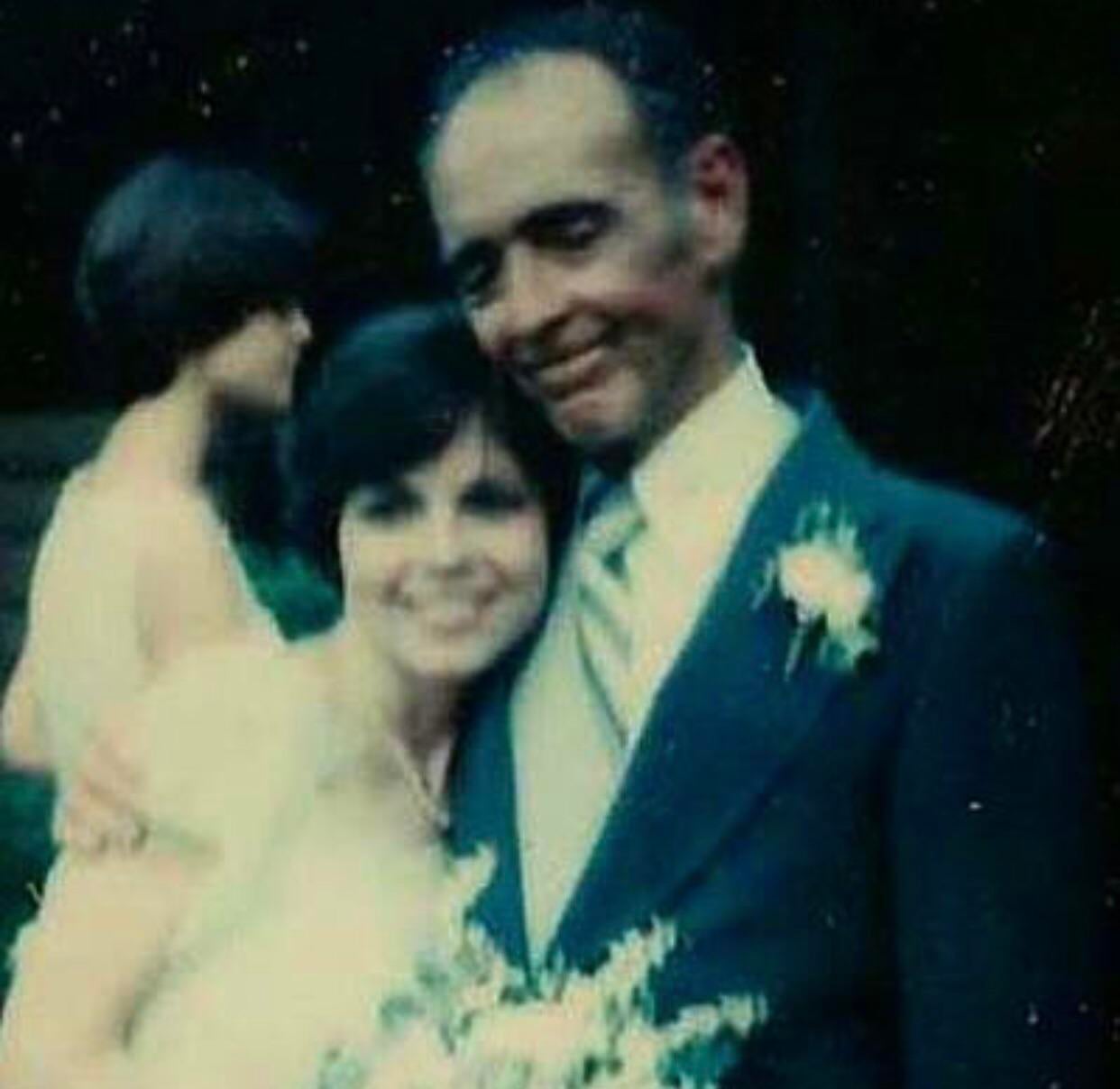
There is no long story in the post, no comment thread full of details. Just a father, a daughter, and a wedding day caught on film. Yet that one image from 1979 carries a lot of history on its shoulders: what weddings looked like at the end of the 1970s, how dads were expected to behave, and how marriage itself was changing.
Here are five things that photo quietly gets right about its time, and why they still matter.
1. The father-of-the-bride role was changing, not disappearing
In the photo, the dad is not a stern escort or a distant wallet. He is a visible emotional anchor. That is a clue to a bigger shift in the late 1970s: fathers were starting to be seen less as formal guardians and more as emotional partners in their daughters’ big moments.
For most of American history, the father-of-the-bride role was openly transactional. The old English phrase “giving the bride away” was not a metaphor. In the 19th century, marriage contracts, dowries, and property transfers made it clear that a woman moved from the legal authority of her father to that of her husband. The walk down the aisle was a public handoff.
By 1979, the law had moved on. Married women could own property, open bank accounts, and keep their own wages. The feminist movements of the 1960s and 1970s had pushed hard against the idea of women as dependents. Yet the aisle ritual survived, now loaded with new meaning.
A good example of this shift played out in popular culture. In the 1971 film “Fiddler on the Roof,” Tevye’s anguish over his daughters choosing their own husbands dramatized the old model. By the time Steve Martin’s “Father of the Bride” remake arrived in 1991, the father’s role was mostly emotional chaos and check-writing, not legal authority. The change had been underway for decades.
Wedding historians note that by the late 1970s, more brides were asking ministers to change the wording from “Who gives this woman?” to something like “Who supports this marriage?” or dropping the question entirely. Yet many still wanted that walk with their dad. It was no longer about ownership. It was about relationship.
So what? That 1979 dad calming his daughter captures a transition point: the father-of-the-bride ritual kept its place in the ceremony, but its meaning shifted from control to comfort, reflecting wider changes in women’s legal status and family expectations.
2. 1979 weddings balanced tradition and the new feminism
The Reddit photo shows a familiar script: white dress, aisle, father, bride. On the surface, it looks like a 1950s wedding. Underneath, the assumptions had changed. Late-1970s weddings were often a negotiation between old forms and new ideas about gender and equality.
Second-wave feminism had spent the previous decade questioning almost every part of marriage. In 1972, Ms. magazine published a satirical “Marriage Contract” that treated marriage like a negotiated partnership instead of a one-sided vow. Books like “The Feminine Mystique” (1963) and “The Female Eunuch” (1970) had pushed women to see housewifery as a choice, not a destiny.
Yet most women still married. In 1979, the median age for first marriage in the United States was about 22 for women and 25 for men. Divorce rates were high, but so was the cultural pull of the wedding day. Many brides wanted both: a traditional ceremony and a modern marriage.
You can see that tension in real weddings from the era. In 1975, for example, some couples began writing their own vows that promised “partnership” and “mutual respect” instead of “obedience.” A 1977 New York Times piece noted more brides keeping their maiden names or hyphenating, while still wearing veils and white dresses in church ceremonies.
Even the choice to have a father walk a bride down the aisle could be a conscious compromise. Some women refused the ritual as sexist. Others reframed it as a thank-you to a parent who had raised them, not a transfer of ownership. The same gesture carried different meanings depending on who was doing the walking.
So what? The 1979 aisle moment shows how late-20th-century couples often kept traditional wedding images while quietly rewriting the script on gender roles and marital expectations behind them.
3. The photo itself marks the end of the film-and-album era
That Reddit post exists because someone in 1979 hired or invited a photographer with a film camera, then kept the prints safe for decades. The look of the image, from color tones to framing, reflects the late film era just before video and digital changed how we record weddings.
In the 1970s, wedding photography was still mostly about posed shots and a curated album. Photographers worked with 35mm film, often on cameras like the Canon AE-1 (released in 1976) or the Nikon F series. Film was expensive, processing took time, and you could not see the results instantly. That meant fewer shots and more staging.
Candid moments like a dad calming his daughter were becoming more common, though. Influenced by photojournalism from Life and Look magazines, some wedding photographers began to sell “documentary” coverage. They shot behind-the-scenes scenes, not just the cake cutting and formal portraits.
A concrete example: Monte Zucker, a well-known American wedding photographer in the 1970s and 1980s, taught seminars on capturing emotion and story, not just stiff poses. His work and that of others helped shift expectations of what a wedding album should contain.
Home video was just starting to creep in. Sony’s Betamax and JVC’s VHS systems hit the consumer market in the mid-1970s, but in 1979, few families had a camcorder at the church. Professional wedding videography would not really take off until the 1980s.
So what? The 1979 image is a relic of the film era, when a handful of carefully chosen photos shaped how families remembered weddings, which in turn fixed certain rituals and emotions in cultural memory.
4. Late-70s weddings were big business and big emotion
That quiet pre-aisle moment hides a noisy fact: by 1979, weddings had become a serious industry. The emotional weight on the bride and her family was tied to a growing expectation that the day should be elaborate, photogenic, and expensive.
The modern American wedding industry really took off after World War II, but it matured in the 1970s. Magazines like Brides (founded earlier but booming by the 70s) and Martha Stewart’s early work on entertaining pushed the idea of a coordinated, themed event. Department stores expanded bridal registries. Hotels and banquet halls chased wedding bookings.
By the late 1970s, the average cost of a wedding in the United States has been estimated in the low thousands of dollars, at a time when median household income was under $18,000 a year. Exact figures vary by source, but the direction is clear: weddings were not cheap family gatherings. They were planned productions.
One visible example is the 1971 wedding of Tricia Nixon, daughter of President Richard Nixon, on the White House lawn. Televised and heavily photographed, it blended traditional vows with a very staged sense of spectacle. While most 1979 brides were not marrying at the White House, the idea of the “perfect” wedding day filtered down.
With that came pressure. Sociologists who interviewed brides in the late 1970s and early 1980s found recurring themes of anxiety: about appearance, about family tensions, about living up to expectations. A father calming a nervous daughter before the aisle was not just sweet. It was necessary.
So what? The nerves in that 1979 Reddit photo are not only about marriage. They reflect the rising social and financial stakes of the modern wedding, where families poured money and emotion into a single, heavily photographed day.
5. The aisle walk linked private family bonds to public ritual
At its core, the image is about a hinge moment. A private relationship between a father and daughter meets a public ritual in front of witnesses. That tension between the intimate and the ceremonial is one reason wedding photos, especially from the 1970s, resonate so strongly online today.
Anthropologists have long treated weddings as “rites of passage.” Arnold van Gennep, writing in 1909, broke such rituals into three stages: separation, transition, and incorporation. The walk down the aisle sits squarely in the transition stage. The bride is no longer just a daughter, not yet a wife in the social sense. She is in between.
In 1979, that in-between space carried extra weight. Divorce rates in the United States had peaked around that time, and public debate about the value of marriage was loud. Yet the ceremony still promised stability, family, and continuity. The father’s presence at his daughter’s side linked her childhood to that promise.
Think of other famous aisle walks. When Princess Anne married Mark Phillips in 1973, she walked with her father, Prince Philip, in a very traditional royal script. When her son Peter Phillips married in 2008, his bride Autumn Kelly also walked with her father, but the media coverage focused more on her personal story and career. The ritual stayed the same. The narrative around it shifted.
The Reddit photo, shared decades later, shows how these private-public moments have gained a second life. What was once a family-only memory becomes part of a wider conversation about dads, daughters, and what weddings mean. Commenters project their own relationships and regrets onto the image.
So what? The 1979 aisle walk matters because it captures the point where one family’s internal story meets a shared cultural script, a moment that still shapes how people think about marriage, parenthood, and growing up.
The Reddit post is short on words, but the image is dense with context. A late-70s dress, a film-era photograph, a father’s hand on his daughter’s arm, a nervous face about to become a public smile. It is not just a sweet family snapshot. It is a small window into how Americans in 1979 tried to hold on to old rituals while living through new ideas about gender, family, and memory.
That is why a simple caption and a 1979 wedding photo can pull in thousands of upvotes in 2024. People are not only looking at one woman and her dad. They are looking at a familiar script and asking themselves whether they would walk the same aisle, in the same way, today.
Frequently Asked Questions
What did a typical American wedding look like in 1979?
A typical 1979 American wedding mixed traditional elements like a white dress, church ceremony, and father-daughter aisle walk with some newer touches. Couples often had formal portraits taken on film, a reception with a band or DJ, and a tiered cake. Many brides still used conventional vows, but some began writing their own or changing wording to reflect more equal partnerships.
Why did fathers walk daughters down the aisle historically?
Historically, the father walking the daughter down the aisle symbolized a legal and economic transfer of authority from father to husband. In societies where women had limited property rights, marriage involved dowries and family agreements. By the late 20th century in places like the United States, the legal meaning had faded, and the ritual became more about emotional support and family connection.
How were 1970s weddings different from 1950s weddings?
1950s weddings in the United States tended to assume a breadwinner-husband and homemaker-wife model, with strong social pressure to marry young. By the 1970s, second-wave feminism, rising divorce rates, and economic change had altered expectations. Couples still used many of the same rituals, but more brides worked outside the home, some kept their own names, and vows and ceremonies sometimes reflected ideas of partnership rather than obedience.
When did wedding photography start focusing on candid moments?
Wedding photography began shifting toward candid, documentary-style images in the 1960s and 1970s, influenced by magazine photojournalism and street photography. Before that, most wedding photos were formal studio-style portraits. By the late 1970s, many photographers were including behind-the-scenes shots, like a parent calming a nervous bride, alongside the traditional posed images in the album.