From a distance it looked like just another pile of rock on a desert ridge. Only when archaeologists started climbing did the shape resolve into something deliberate: a stepped stone pyramid, about 15 meters high, built more than 2,000 years ago on a lonely slope above the Dead Sea.
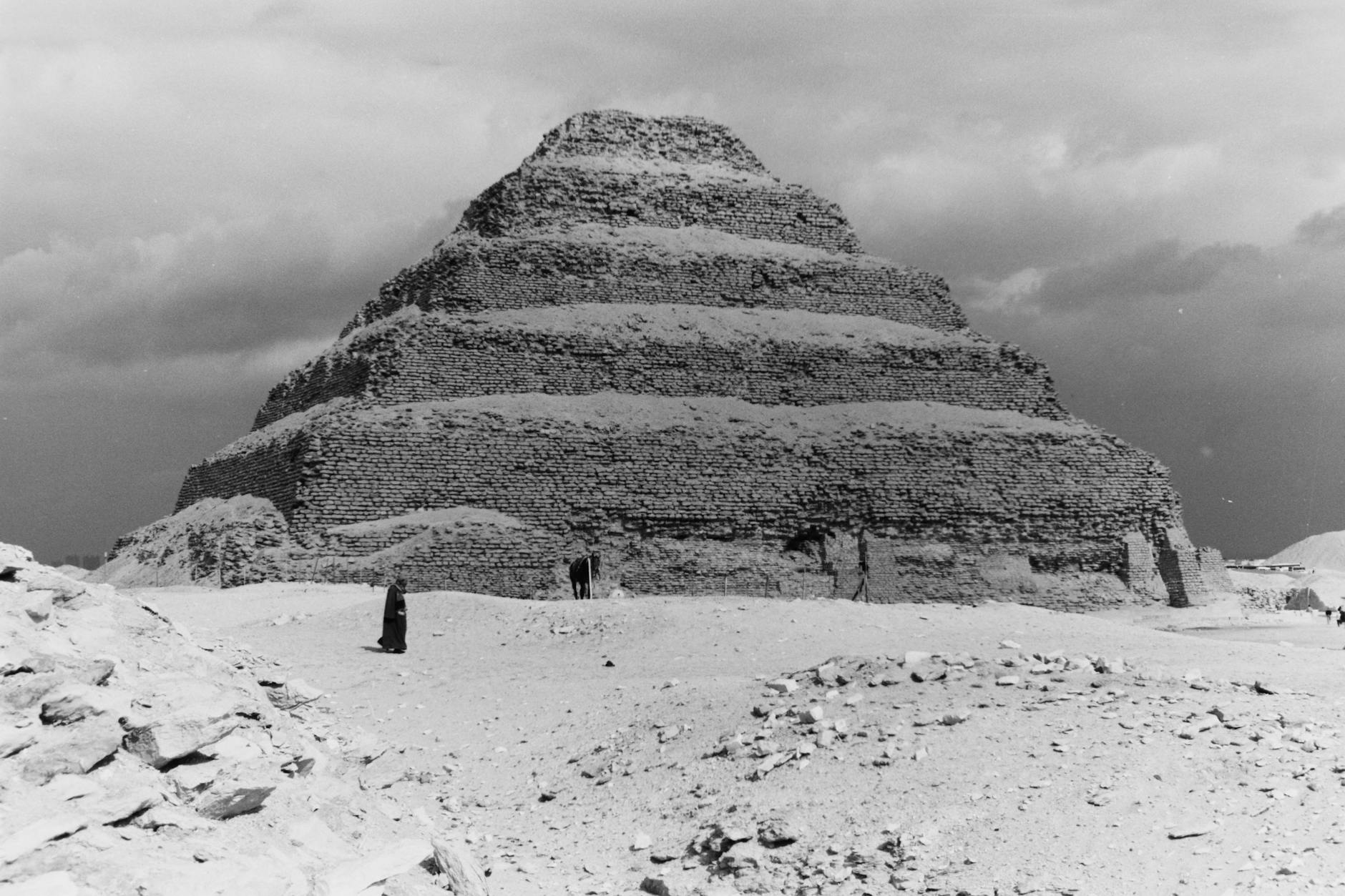
This 2,200-year-old pyramid in Israel’s Judean Desert is not a pharaoh’s tomb and not a lost city. It is part of a chain of desert monuments that tell a quieter story about power, memory and how ancient Judeans tried to mark their dead in a harsh, empty place. By the end of this explainer you will know what the structure actually is, who likely built it, and why a small pyramid on a desert ridge matters for understanding the age of the Maccabees and Herod.
What was the Judean Desert pyramid, exactly?
The “mysterious pyramid” reported in headlines is a stepped stone monument from the late 2nd or early 1st century BCE, roughly 2,200 years old. It is not a hollow, internal chambered pyramid like those in Egypt. It is a solid stone cairn built in a pyramidal shape, probably as a marker for a tomb or memorial.
Archaeologists describe it as a terraced or stepped pyramid. Large fieldstones were stacked in receding layers to form a four-sided structure that narrows as it rises. Its original height is estimated at about 15 meters (around a five-story building), though erosion and stone robbing have reduced it.
The structure was found in the Judean Desert, in the region west of the Dead Sea in modern Israel. It sits on a prominent ridge, visible from far away, in the same general desert belt that holds Qumran, Masada and a string of ancient desert fortresses and way stations.
Current research suggests the pyramid was part of a burial complex. In the Judean Desert and along the Dead Sea, archaeologists have identified a series of similar stone pyramids and tower-like markers associated with tombs and family burial estates. These are often called nefesh monuments, a Hebrew and Aramaic term linked to the soul or life-breath, used for upright memorials to the dead.
So the short, snippet-ready version: The 2,200-year-old Judean Desert pyramid is a solid stone funerary monument, probably a nefesh marker for an elite tomb from the late Hellenistic or early Hasmonean period, not an Egyptian-style royal pyramid.
That matters because it shifts the story from “lost Egyptian pyramid in Israel” to “rare surviving monument of how Judean elites commemorated their dead at the dawn of the Hasmonean and Herodian age.”
What set it off: Why build a pyramid here, at this time?
To understand why someone in Judea was stacking stones into a pyramid around 200 BCE, you have to picture the region’s politics. This was the Hellenistic period, the age after Alexander the Great carved up the Near East and left his generals to fight over the pieces.
Judea lay between two rival Greek kingdoms: the Ptolemies in Egypt and the Seleucids in Syria. Control of the Dead Sea region shifted back and forth. Greek culture, building styles and ideas about honor and commemoration seeped into local traditions.
At the same time, local Judean elites were gaining power. By the mid-2nd century BCE, the Hasmonean family, better known from the story of the Maccabees, had led a revolt against Seleucid rule. They created an independent Judean kingdom that expanded aggressively into the surrounding desert and Transjordan.
In this world, monuments were political statements. A big, visible structure on a ridge told travelers and neighbors: someone important is buried here, and their family controls this territory. The Judean Desert, though harsh, was not empty. It was a corridor of routes linking Jerusalem to Jericho, the Dead Sea, and beyond to Moab and Nabatea.
There is another factor. Jewish elites in this period were negotiating how far to go with Greek styles. We see hybrid architecture in Jerusalem and Jericho: Greek columns paired with local building traditions, Hebrew and Aramaic inscriptions in buildings that borrow Hellenistic layouts. A stepped stone pyramid as a tomb marker fits this mix. It echoes Egyptian and broader eastern Mediterranean pyramid and tower forms, but in a local, solid-cairn version tied to Jewish funerary customs.
So the root cause was not a random love of pyramids. It was a mix of Hellenistic influence, rising local power, and the need for visible, durable markers of status and memory in a contested desert zone. That matters because it anchors the monument in real political and cultural pressures, not in fantasies about lost Egyptian colonies or aliens.
The turning point: From desert cairn to historical clue
For centuries this pyramid was just part of the desert. Stones tumbled. Nomads and shepherds passed by. Archaeologists working the Judean Desert in the 20th century focused more on sites like Qumran and Masada, where texts and dramatic siege stories grabbed attention.
The turning point came when systematic surveys of the Judean Desert ridges started to map every visible structure, not just the famous ones. Israeli archaeologists, including teams from the Israel Antiquities Authority, began documenting stone heaps, towers and cairns that had been ignored as “just rocks.” Careful measurement and excavation showed that some of these were deliberately shaped into stepped pyramids and were associated with burial caves or shafts.
In recent years, one of these monuments, dated to around 2,200 years ago, caught media attention as a “mysterious pyramid.” The mystery label sells, but the real shift was scholarly: researchers began to treat these desert pyramids as a class of Judean funerary architecture, not as oddities.
Archaeologists compared the Judean examples with similar markers in Nabatean and other Near Eastern contexts. They looked at pottery, construction style and stratigraphy to pin down dates. The late 2nd to early 1st century BCE date range lines up with the Hasmonean expansion into the desert and the growth of estates and fortresses in the region.
That reclassification is the turning point. The structure moved from “weird pile” to “data point in a pattern of elite Judean desert burials.” It matters because once you see it as part of a pattern, you can start asking better questions about who built it and what it meant in their world.
Who drove it: The elites behind the desert monuments
No inscription has yet been reported that names the person buried under this specific pyramid. So we are in the realm of educated inference, not a neat tombstone biography.
Given the date and location, the most likely builders were members of the Judean elite tied to the Hasmonean or early Herodian regimes. These were priestly and aristocratic families who held land, commanded troops and staffed the royal court.
Under the Hasmoneans (roughly 140–37 BCE), the Judean kingdom pushed into the desert and beyond. Fortresses such as Hyrcania, Machaerus and Alexandrion guarded routes and projected power. Estates near the Dead Sea controlled valuable resources like balsam and bitumen. The people who ran these operations had both the money and the motive to build big tomb markers.
Herod the Great, who took power in 37 BCE, continued and expanded this pattern. He rebuilt and fortified desert sites like Masada and Herodium and poured resources into monumental building. Herod himself chose a man-made hill with a striking conical shape, Herodium, as his burial place, complete with a grand tomb and a distinctive desert profile.
The Judean Desert pyramid fits this broader habit of desert monumentality. It is smaller and earlier than Herodium, but the logic is similar: bury the elite dead in a place where their memory is physically tied to the land they controlled, and make the monument visible from a distance.
There is also a religious and cultural dimension. Jewish law and custom in this period discouraged elaborate grave goods and the kind of lavish, statue-filled tombs seen in some Hellenistic cities. Instead, status could be expressed in the scale and visibility of the tomb marker itself. A large stone pyramid above a relatively simple burial cave would be one way to square elite ambition with local norms.
So while we cannot name the individual, we can say the builders were part of the Judean ruling class that managed desert estates and fortresses in the age of the Hasmoneans and Herod. That matters because it ties the monument to the same people who shaped the politics and economy of Judea in the century before and after the time of the Maccabees.
What it changed: Rethinking Judean architecture and identity
On its own, a single stone pyramid might seem like a curiosity. In context, it forces historians to adjust how they think about Judean architecture and cultural identity in the late Hellenistic period.
First, it shows that “pyramids” were not exclusively Egyptian in the ancient imagination. Solid, stepped pyramidal markers appear in various Near Eastern cultures as tomb or memorial structures. The Judean example confirms that local elites were willing to use that form, in their own way, without importing Egyptian religion or burial practice.
Second, it adds a layer to the debate about Hellenization. For a long time, the story of Judea in this era was told as a clash between Greek culture and Jewish tradition, with the Maccabean revolt as the key moment. Structures like this pyramid show a more negotiated reality. Judean elites borrowed forms and ideas from their neighbors, then adapted them to fit their own religious and social boundaries.
Third, it changes how archaeologists read the Judean Desert. The region is not just a backdrop for the Dead Sea Scrolls or dramatic sieges. It was a zone of planned estates, marked territories and family memory. The desert pyramids, towers and cairns are part of a network of sites that map who controlled what and how they wanted to be remembered.
Finally, it gives material weight to texts that speak about Judean elites seeking honor and memory. Ancient Jewish writings from this period, including some of the books found among the Dead Sea Scrolls, wrestle with questions of death, resurrection and the fate of the soul. A nefesh monument in stone is the physical counterpart to those debates.
So the discovery did not rewrite world history, but it did nudge scholars to see late Second Temple Judea as more architecturally creative, more regionally connected and more invested in desert space than older narratives allowed. That matters because it refines our picture of a society that sits at the root of both Judaism and Christianity.
Why it still matters: From Reddit headlines to real history
When a story about a “mysterious 2,200-year-old pyramid” in Israel hits Reddit, the imagination jumps straight to lost civilizations, secret chambers or Egyptian outposts. The reality is quieter but more interesting.
This Judean Desert pyramid is a clean example of how archaeology corrects our assumptions. It is not an Egyptian royal tomb, not evidence of aliens, and not a random pile of stones. It is a local Judean funerary monument that tells us how a specific group of people, at a specific time, tried to anchor their memory in a harsh landscape.
For modern readers, it matters in three ways.
First, it sharpens our sense of the Second Temple period as a real, material world. The same era that produced the Dead Sea Scrolls and the stories of the Maccabees also produced stone pyramids on desert ridges. That makes the period less abstract and more human.
Second, it is a reminder that cultural identity in antiquity was not a simple yes-or-no to foreign influence. Judean elites could reject some Greek and Egyptian practices while still borrowing building forms and adapting them. The pyramid is a stone record of that negotiation.
Third, it shows how much of ancient Judea is still under our feet, or in this case under our boots on a desert hike. A monument that once meant everything to a powerful family disappeared into the background for two millennia. Only careful survey and excavation brought it back into the story.
So the next time a headline promises a “mysterious pyramid” in the Judean Desert, the better question is not “Is it Egyptian?” but “Whose memory were they trying to protect from the desert, and why?” That question is what turns a stack of old stones into history.
Frequently Asked Questions
What is the 2,200-year-old pyramid found in Israel?
It is a solid stone, stepped pyramid monument in the Judean Desert, dated to about 2,200 years ago. Archaeologists interpret it as a funerary or memorial structure, probably a “nefesh” marker for an elite Judean tomb from the late Hellenistic or early Hasmonean period, not an Egyptian-style royal pyramid.
Did ancient Egyptians build the Judean Desert pyramid?
No. There is no evidence that Egyptians built this structure. Its date, construction style and location all point to local Judean elites in the late 2nd or early 1st century BCE. While the shape is pyramidal, it is a solid stone cairn associated with Judean burial customs, not an Egyptian royal tomb.
Was anything found inside the Judean Desert pyramid?
The monument itself is solid, so it does not contain internal chambers like Egyptian pyramids. Where excavations have been possible, related Judean Desert pyramids are linked to nearby burial caves or shafts rather than hollow interiors. Any human remains or grave goods at this specific site have not been widely reported, and desert conditions and later disturbance often remove organic material.
Why did ancient Judeans build pyramid-shaped tomb markers?
Judean elites in the Hellenistic and early Hasmonean periods were influenced by regional architectural forms, including stepped and pyramidal markers, but adapted them to local religious norms. Large, visible stone monuments on ridges above the Dead Sea allowed powerful families to mark their dead, assert control over desert routes and estates, and express status without adopting foreign burial rites.