Three young women squint into the Mediterranean sun. Hair set just so, skirts pressed, hands maybe a little awkward because someone said, “Stand still, I am taking it.” It is Italy in the early 1950s, and one of them will grow up to be somebody’s nonna. On Reddit, the photo is just titled: “My nonna and her sisters. Italy, early 1950s.”
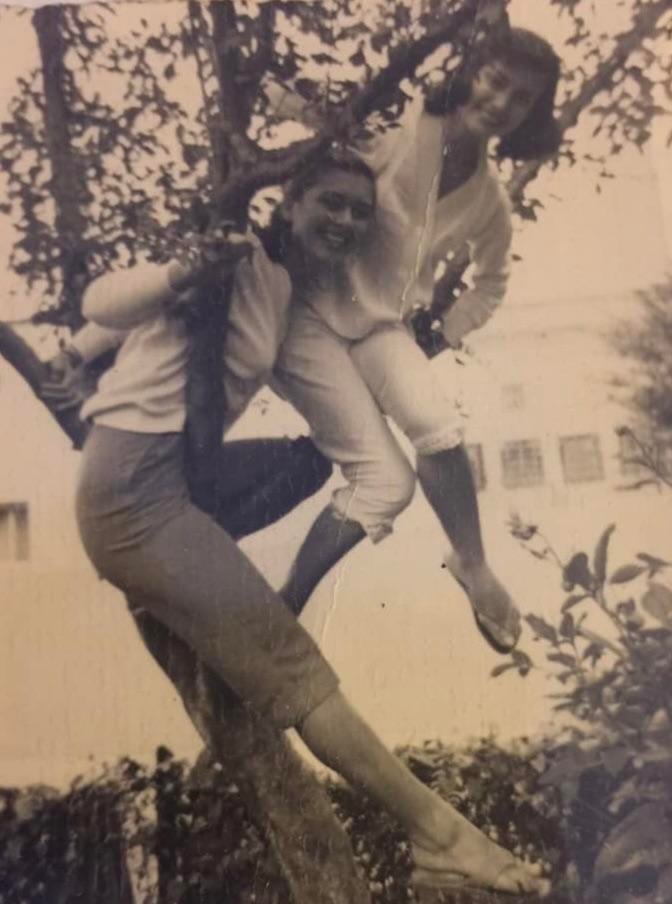
At first glance, it is only a sweet family snapshot. But that kind of photo is a time capsule. The way they dress, how they stand, where they are, even the fact a camera was present, all point to what was happening in Italy after World War II.
A 1950s Italian family photo is not just nostalgia. It is evidence of how ordinary women lived through war’s aftermath, mass migration, economic change, and shifting ideas about gender and family. By the end of this, you will be able to look at a picture like that Reddit post and see at least five big stories hiding in the frame.
1. Postwar Poverty and Recovery: Why 1950s Italy Looked the Way It Did
When you see a 1950s Italian nonna in a photo, you are looking at someone who grew up in a country bombed, starved, and politically shattered. The early 1950s were the hangover years after World War II and the fall of Mussolini.
Italy had been a battlefield from 1943 to 1945. Cities like Naples, Cassino, and parts of Rome were heavily damaged. By the war’s end, industrial production had crashed, inflation was wild, and many families survived on ration cards and black-market food. A girl who is about 20 in a 1952 photo was likely born around 1932. That means childhood under fascism, teenage years under bombs, and early adulthood in ruins.
One concrete example: in 1951, the Italian census recorded that about 40 percent of the workforce was still in agriculture, much of it in poor, rural southern regions. In places like Calabria or Sicily, families often lived in one or two rooms, sometimes sharing space with animals. Malnutrition rates were high. The Marshall Plan and American aid brought money and goods, but it took time to reach ordinary households.
So when you see a nonna and her sisters in simple dresses, maybe the same pair of shoes passed around, that is not just a fashion choice. It reflects a country where cash was tight and fabric was precious. Many women sewed their own clothes or altered hand-me-downs. A dress in a photo might have been worn for years, carefully mended and saved for special occasions.
Postwar poverty shaped how people posed too. A rare family photograph was an event. Cameras were expensive, film cost money, and developing photos was not something you did casually. A single black-and-white shot could be the only formal image of those sisters together before marriage scattered them.
Italy’s slow climb out of this hardship, helped by foreign aid and internal reforms, set the stage for the “economic miracle” of the late 1950s and 1960s. That recovery changed everything from diet to housing to education. So a simple 1950s family photo matters because it catches the country right before that takeoff, when memories of hunger and rubble were still fresh and shaped how people lived, dressed, and saved.
2. The Great Migration: How Many Nonne Left, Even If the Photo Stayed
Another thing hiding in a 1950s Italian family photo is absence. For every nonna who stayed in Italy, there were many who left. The early 1950s were part of a huge wave of Italian migration, especially from the poorer south.
Between roughly 1945 and the early 1970s, millions of Italians moved abroad. Estimates vary, but historians generally agree that more than 4 million Italians emigrated in those decades, heading to places like the United States, Canada, Argentina, Australia, Belgium, and Switzerland. Many left from southern regions such as Campania, Calabria, and Sicily, where land was scarce and jobs were even scarcer.
Think of a real case: in 1951, the Italian government signed agreements with countries like Belgium to send workers to coal mines in exchange for coal shipments. Thousands of young Italian men went north. Women often followed later as wives, or they left on their own to work as domestic servants or in factories in places like Toronto, Melbourne, or New York.
So that Reddit photo of “my nonna and her sisters” may have been taken just before someone left the village. One sister might have boarded a ship from Naples to Ellis Island or Halifax. Another might have gone north to Turin or Milan to work in a Fiat factory. The picture becomes a record of a family before migration scattered it across continents.
Migration changed Italy and the countries that received Italians. Money sent home by emigrants, called rimesse, helped families build houses, buy land, and pay for education. In some southern villages, those remittances were a major source of income. At the same time, Italian communities abroad reshaped cities from Buenos Aires to Brooklyn, bringing food, language, and Catholic festivals with them.
When you see a 1950s Italian nonna in an old photo, you are often looking at the starting point of a diaspora story. That matters because it explains why so many people on Reddit and elsewhere have a nonna in Italy and a life somewhere else. The photo is the bridge between a poor rural past and a global family future.
3. Fashion and Respectability: What Their Clothes Say About Class and Gender
People on Reddit often zoom in on the dresses, hair, and shoes in these old photos. “They look so elegant,” someone will write. The elegance is real, but it is also strategic. Clothing in 1950s Italy was about respectability as much as style.
In the early 1950s, Italian women’s fashion sat at a crossroads. On one side, there was traditional modest dress, shaped by Catholic norms and rural custom. On the other, there was the growing influence of American and French styles, especially in cities. Skirts were often knee-length or mid-calf, waists cinched, shoulders covered. Trousers on women were still rare in many areas, especially outside big cities.
A concrete example: by 1951, designers like Emilio Pucci and the house of Sorelle Fontana were gaining attention in Rome, dressing film stars such as Ava Gardner and Anita Ekberg. Their glamorous designs filtered slowly into everyday life through magazines, films, and shop windows. A village girl might copy a neckline or hairstyle she saw on Sophia Loren, even if her dress was homemade from cheap cotton.
Hair and makeup mattered too. In many photos, young women wear carefully set waves or pulled-back buns, sometimes with simple jewelry or a cross necklace. That was not just vanity. A neat appearance signaled good upbringing and moral respectability in a society where reputation could affect marriage prospects and social standing.
At the same time, the very act of posing confidently for a camera hints at change. These are not veiled, hidden figures. They are young women claiming space in front of the lens, aware they are being seen. As consumer culture grew in the later 1950s, Italian fashion would explode onto the world stage, but the seeds are already there in these modest yet stylish outfits.
Fashion in a 1950s nonna photo matters because it shows how women navigated class, morality, and modernity. The clothes are a compromise between tradition and aspiration, and they mark the beginning of Italy’s rise as a style powerhouse.
4. Faith, Family, and the Power of the Church
Even when you do not see a church in the background, Catholicism is usually in the frame of a 1950s Italian family photo. Faith shaped daily life, gender roles, and even when photos were taken.
In the early 1950s, Italy was still deeply Catholic in practice and law. The Lateran Pacts of 1929 had made Catholicism the state religion under Mussolini, and although the postwar republic was more secular on paper, the Church kept huge influence. Divorce was illegal. Civil marriage without a church ceremony was rare outside some urban circles. Contraception was taboo.
Look at the details in many nonna photos: a cross on a chain, a rosary peeking from a pocket, a church square in the background. Family portraits were often taken on religious feast days, after Mass, when everyone was already dressed in their best. First communions, confirmations, and weddings generated some of the only formal photos a family might ever pay for.
A concrete example: in 1948, the Christian Democracy party, strongly backed by the Church, won Italy’s first postwar election. Priests warned from pulpits against voting for the Communists, who were portrayed as godless. That alliance between Church and centrist politics shaped laws on family, education, and morality throughout the 1950s.
For young women, this meant strong pressure to marry, have children, and keep family honor intact. A nonna in an early 1950s photo is likely unmarried if she looks very young, but marriage was probably not far off. Large families were common. In 1951, Italy’s total fertility rate was around 2.3 to 2.4 children per woman nationwide, higher in rural south and islands, though exact regional numbers vary.
At the same time, the Church provided community, charity, and a sense of stability after the chaos of war. Parish youth groups, Catholic Action organizations, and church-run schools gave girls social life and limited leadership roles, even if within strict boundaries.
Faith and family norms in 1950s Italy matter because they explain both the warmth and the limits in those old photos. The tight-knit sisterhood you see was supported by a culture that prized family loyalty, but it also kept women’s choices narrow. Later battles over divorce, abortion, and women’s work would all grow out of this starting point.
5. Women Between Tradition and Change: From Farm Work to Factory Floors
Look again at the nonna and her sisters. They are young, healthy, and standing still for the camera, but their real lives were probably anything but still. 1950s Italian women worked hard, often in ways that did not show up in official statistics.
In rural areas, women labored in fields, tended animals, cooked, cleaned, and raised children. Much of this was unpaid family work. In cities and industrializing regions, more women were entering paid jobs, especially in textiles, food processing, and domestic service. But social expectations still said a “good” woman’s primary role was wife and mother.
Take a concrete example: the Fiat factories in Turin. By the mid 1950s, Fiat was expanding fast, and women were hired for certain assembly line and clerical jobs. Many came from poorer southern regions, part of an internal migration from south to north. They lived in crowded boarding houses, sent money home, and navigated a world of unions, bosses, and male coworkers.
At the same time, education was slowly opening up. The 1948 constitution guaranteed equal rights for men and women on paper. In practice, girls’ school attendance improved through the 1950s, especially in cities. A nonna born in the early 1930s might have finished only elementary school, but her younger sisters could have reached middle school or even high school, depending on family means and location.
Marriage patterns were shifting too. While arranged or strongly guided matches remained common in many villages, young people had more chances to meet at dances, cinemas, and workplaces. The influence of American films and music introduced new ideas about romance and female independence, even if many parents resisted.
These changes were uneven and often slow. Many women still married young and left paid work when children came. Legal equality did not mean social equality. But the seeds of later feminist movements were planted in this decade, in the experiences of women who balanced farm work or factory shifts with family duties.
So when you see a 1950s nonna in a photo, you are not just seeing “someone’s sweet grandmother.” You are looking at a woman who likely carried water, harvested crops, sewed clothes, maybe worked in a shop or factory, and raised children in a country pulling itself out of war. Her life, and the quiet shifts in education and work she experienced, helped move Italy from a traditional, rural society toward a more modern one.
A single Reddit photo of “my nonna and her sisters” in early 1950s Italy opens onto all of this. Postwar poverty and recovery. Mass migration. Fashion as respectability and aspiration. The weight of Catholic family norms. Women caught between old expectations and new chances.
Those black-and-white images matter because they are not just about one family. They are the visual record of how millions of Italians, especially women, lived through a turning point decade. For their grandchildren scrolling Reddit today, understanding the world behind those smiles helps explain how their families ended up where they are, and what it cost the people in the picture to get them there.
Frequently Asked Questions
What was life like in Italy in the early 1950s?
Life in early 1950s Italy was marked by postwar poverty, rebuilding, and social conservatism. Many families were poor, especially in the rural south, and people relied on agriculture, remittances from relatives abroad, and slowly growing industrial jobs. At the same time, there was a strong Catholic culture, traditional gender roles, and the first signs of economic growth that would accelerate later in the decade.
Why did so many Italians emigrate after World War II?
Many Italians emigrated after World War II because of poverty, unemployment, and lack of land, especially in southern regions like Calabria, Sicily, and Campania. Between the late 1940s and early 1970s, more than 4 million Italians left for countries such as the United States, Canada, Argentina, Australia, Belgium, and Switzerland. They sought better wages and stability, and their remittances helped support families and villages back home.
How did Italian women dress in the 1950s?
Italian women in the 1950s usually wore modest dresses or skirts that were knee-length or mid-calf, with covered shoulders and defined waists. Clothing was often homemade or altered due to limited money, especially in rural areas. Urban fashion was influenced by emerging Italian designers and Hollywood films, but everyday outfits still balanced style with respectability and Catholic norms.
What roles did women have in 1950s Italy?
Women in 1950s Italy were expected to focus on marriage, motherhood, and running the household, but many also did heavy work. In rural areas they labored on farms, while in cities they worked in factories, shops, and as domestic servants. Legal equality was written into the 1948 constitution, and more girls went to school, yet social expectations remained conservative. These mixed experiences laid the groundwork for later changes in women’s rights.